• Global CNC market projected to reach $128B by 2028 • New EU trade regulations for precision tooling components • Aerospace deman
NYSE: CNC +1.2%LME: STEEL -0.4%

Comparing energy-efficient machine tools by energy use per part
Comparing energy-efficient machine tools by energy use per part
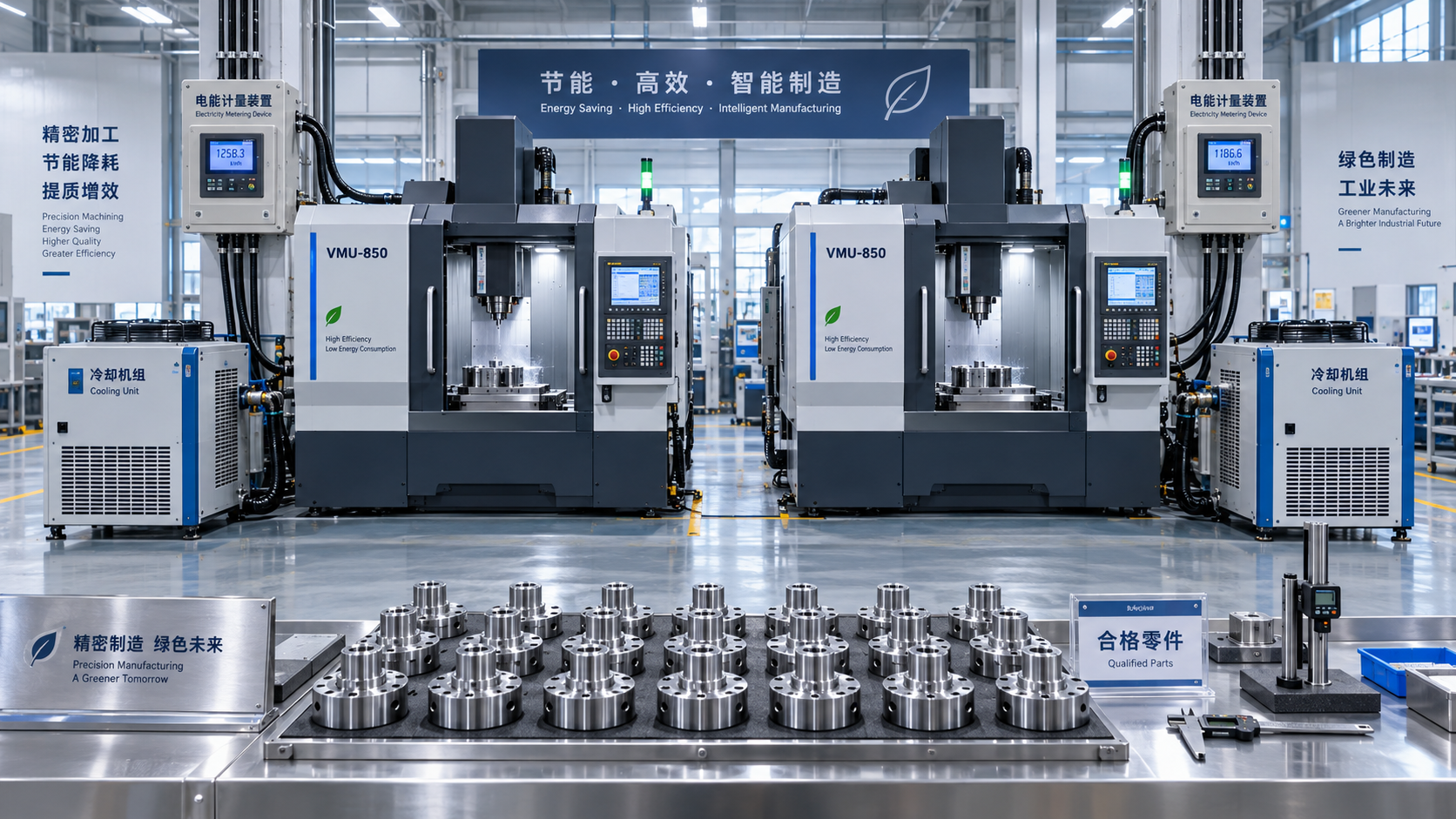
Comparing energy-efficient machine tools requires more than checking rated power or peak cutting efficiency. For technical evaluators, energy use per accepted part provides a practical basis for assessing CNC lathes, machining centers, and multi-axis systems under comparable production conditions. This metric captures how cycle time, idle consumption, auxiliary equipment, and scrap rates influence actual energy performance.
The distinction matters because a machine that draws less power may run longer, require another setup, or produce more rejected parts. A higher-powered system may consume less energy per finished component if it completes the process faster without compromising quality. Equipment selection should therefore start with the production task, not the motor nameplate.
Across automotive, aerospace, energy equipment, and electronics manufacturing, the useful question is the same: how much energy does the proposed production route require to deliver a component that passes inspection?
Make the denominator an accepted part
The basic calculation is straightforward:
Energy per accepted part = total energy consumed within the agreed measurement boundary ÷ number of accepted parts produced.
Express the result in kWh per accepted part. Define “accepted” using the drawing, dimensional tolerances, surface finish requirements, and any relevant process acceptance criteria. Counting every completed cycle as good output can make an unstable process look efficient.
Energy consumed by rejected parts stays in the numerator. So does energy used for rework, where rework falls within the comparison boundary. If inspection results arrive after the measurement period, reconcile the accepted quantity before publishing the final figure.
Avoid comparing unlike components through a single average. A precision disc, a long shaft, and a complex structural part impose different cutting, handling, and thermal demands. For mixed production, calculate results by part family, then weight them using a documented production mix. Otherwise, the machine tested on easier work may appear more efficient for the wrong reason.
Draw the energy boundary before testing
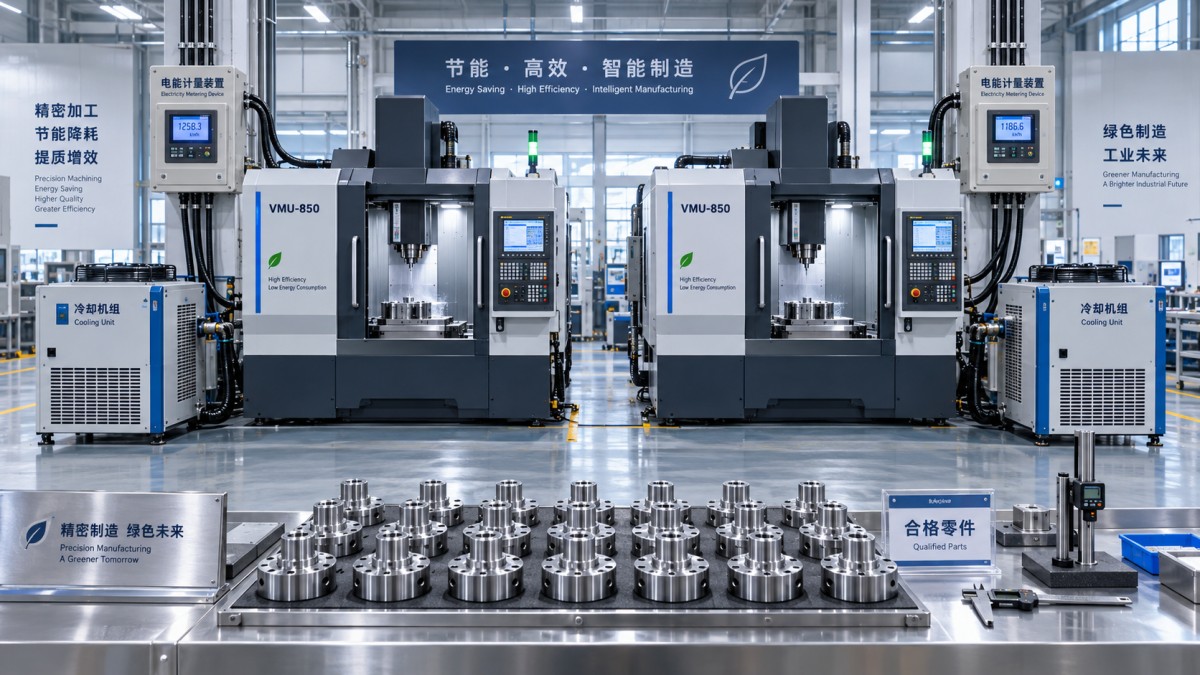
A meter at the machine’s electrical inlet is a useful starting point, but it does not necessarily capture the complete process. External coolant chillers, mist extraction, high-pressure coolant units, robot loaders, and central compressed-air systems may sit outside that measurement point.
This is particularly important when comparing a standalone CNC lathe with an automated cell. The cell may reduce handling delays while adding robot and conveyor consumption. Measuring only the lathe could hide those loads; measuring the entire cell against a bare machine could also create an unfair comparison if equivalent handling is excluded from the alternative.
A practical boundary diagram should show the machine, dedicated auxiliaries, shared services, and output inspection point. Mark each load as directly measured, allocated, or excluded. That simple exercise often exposes more uncertainty than a specification sheet does.
Compressed air deserves separate attention. Air volume is not electrical energy. Converting consumption into kWh requires a defensible relationship to the supplying compressor system, including its operating conditions. Where this cannot be established, report air consumption separately rather than presenting an unsupported electricity equivalent.
For shared extraction or cooling equipment, document the allocation method and its limitations. Retaining separate machine-only and cell-level results makes the comparison easier to audit and adapt to a different factory layout.
Compare equivalent production outcomes, not identical settings
A fair trial does not always require identical spindle speeds, feeds, or toolpaths. Different machine architectures may achieve the same quality more efficiently through different strategies. Forcing identical settings can prevent a candidate from using the capability being evaluated.
Instead, hold the production requirements constant: material grade and condition, incoming stock geometry, finished drawing, inspection method, and required output. Allow a technically justified process for each machine, but record the differences in tooling, fixtures, cutting parameters, and operation sequence.
Two comparisons can be useful. A controlled test with closely matched tooling helps isolate machine behavior. A production-optimized test evaluates the proposed solution as it would actually operate. Keep those results distinct; they answer different questions.
- Record tool condition and replacement criteria so one candidate is not tested with fresh edges while another uses worn tools.
- Include loading, unloading, probing, and routine chip-clearing time when these activities belong to the proposed process.
- Identify whether thermal stabilization is complete and whether dimensional acceptance depends on warm-up.
- Log operator interventions, alarms, and stoppages rather than removing them without explanation.
Multi-axis systems need a broader comparison when they eliminate secondary operations. Their higher instantaneous consumption may be offset by fewer transfers, fewer fixtures, and less repeated workholding. Compare energy for the complete route to the accepted component, not one isolated machining stage.
Measure enough of the operating pattern to explain the result
A single cutting cycle rarely represents factory energy performance. Controls, lubrication systems, pumps, and thermal management can consume energy while no material is being removed. Their contribution per part depends heavily on utilization.
Use an appropriately installed power analyzer or energy meter that measures real electrical energy. Confirm its accuracy, connection arrangement, and suitability for the supply. Electrical installation should be handled by qualified personnel. Spindle-load percentages and controller estimates can support diagnosis, but should not be treated as equivalent to a validated inlet measurement.
Log operating states alongside energy: startup, warm-up, ready, cutting, tool change, loading, standby, and shutdown. Choose a logging interval that can distinguish relevant events. Synchronizing meter data with controller or production timestamps helps identify whether a large load belongs to cutting, cooling, or waiting.
Run repeated batches rather than relying on one favorable cycle. Report the average, observed variation, accepted quantity, and test duration. Where candidate results are close relative to measurement uncertainty or batch variation, treat the ranking as unresolved until further testing.
Keep an uninterrupted production result separate from a representative shift result. The former shows performance under steady output; the latter reveals the effect of breaks, changeovers, waiting, and restart behavior. Both are useful, but they are not interchangeable.
Read the trade-offs behind a lower kWh figure
Lower average power is not automatically better. Energy is accumulated power over time, so reducing cycle duration can outweigh a higher cutting load. Conversely, a fast cycle may deliver little shift-level benefit if the machine spends long periods waiting with auxiliaries running.
Standby functions deserve testing under realistic gaps between jobs. Switching off a pump or cooling unit may save electricity, but restarting it can introduce delays or affect thermal stability. Confirm that the proposed settings preserve process readiness and dimensional capability.
Quality is a hard constraint, not a variable to trade away silently. Reduced coolant pressure, altered acceleration, or more aggressive cutting may change energy consumption, but the result is only relevant if tool life, surface integrity, and dimensional requirements remain acceptable.
Translate test results into the intended factory workload
For high-volume production, stable cycle time and yield can dominate the comparison. For short runs, setup, warm-up, and idle periods may matter more. A machine optimized for continuous shaft production should not automatically be preferred for frequent changeovers between small batches.
Build the annual estimate from the expected part mix and operating schedule. Include production energy, non-production operating states, and recurring setup requirements without double-counting loads already included in batch measurements. Test a lower-utilization scenario as well as the planned workload; production forecasts are rarely exact.
Electricity cost requires another layer. Time-of-use tariffs and demand charges can change the financial outcome even when annual kWh is similar. Keep energy consumption, electricity cost, and carbon estimates separate. A carbon comparison needs an appropriate electricity emissions factor, not an assumption that all factories use the same supply mix.
Digital monitoring can make these assessments repeatable, especially across flexible lines and robot-assisted cells. However, a dashboard is only useful if its meter boundaries, production counts, and state definitions are consistent. Connectivity alone does not establish energy efficiency.
Ask for evidence that survives installation
When comparing energy-efficient machine tools from international suppliers, request the test conditions rather than relying on a headline saving. Supply configuration, cooling arrangements, software settings, and installed options can differ between a demonstration machine and the delivered system. Manufacturing origin is not a substitute for measured performance.
The useful evidence package includes energy records, accepted-part counts, inspection results, cycle definitions, auxiliary boundaries, and the tooling configuration. Agree which conditions will be reproduced during acceptance testing, and which differences require an adjustment or retest.
Then consider serviceability. An efficient operating mode that depends on poorly supported sensors, cooling controls, or software may be difficult to sustain. Check maintenance requirements and whether production staff can restore the validated settings after servicing.
The stronger selection is the machine or cell that delivers acceptable quality and required throughput with lower, demonstrable energy use under your workload. Before committing, turn that conclusion into a measurable acceptance condition—not just a claim in the quotation.
Recommended for You
![]() Mitsubishi Electric Announces Physical AI System Linking Humanoid Robots and CNC MachinesMachine Tool Industry Editorial Team
 Precision Machining for Defense: Supplier Quality and Traceability ChecksManufacturing Market Research Center
![]() Nidec Machine Tool Launches MVR-5X Five-Axis Gantry MachineMachine Tool Industry Editorial Team
 Choosing a Precision Disc Parts Manufacturer in China: Tolerances and Quality ChecksManufacturing Market Research Center
![]() Siemens Executive Says AI Could Raise Factory Automation to 80%Manufacturing Market Research Center
 Choosing Automated Machine Tools for High-Mix, Low-Volume ProductionMachine Tool Industry Editorial Team


Aris Katos
Future of Carbide Coatings
15+ years in precision manufacturing systems. Specialized in high-speed milling and aerospace grade alloy processing.
▶
Choosing a CNC Machine for Mold Making: Accuracy, Rigidity, and Surface FinishCNC Machining Technology Center▶
How to Cut CNC Machining Energy Use per Part Without Longer Cycle TimesCNC Machining Technology Center▶
Will a Mazak CNC retrofit work with your existing servo drives?CNC Machining Technology Center▶
Do energy-efficient machine tools reduce power use at partial load?CNC Machining Technology Center▶
Comparing energy-efficient machine tools by energy use per partCNC Machining Technology Center
▶
Mastering 5-Axis Workholding Strategies
Join our technical panel on Nov 15th to learn about reducing vibrations in thin-wall components.

Providing you with integrated sanding solutions
Before-sales and after-sales services
Comprehensive technical support