• Global CNC market projected to reach $128B by 2028 • New EU trade regulations for precision tooling components • Aerospace deman
NYSE: CNC +1.2%LME: STEEL -0.4%

What 5 Axis Machining Solves in Impeller Manufacturing
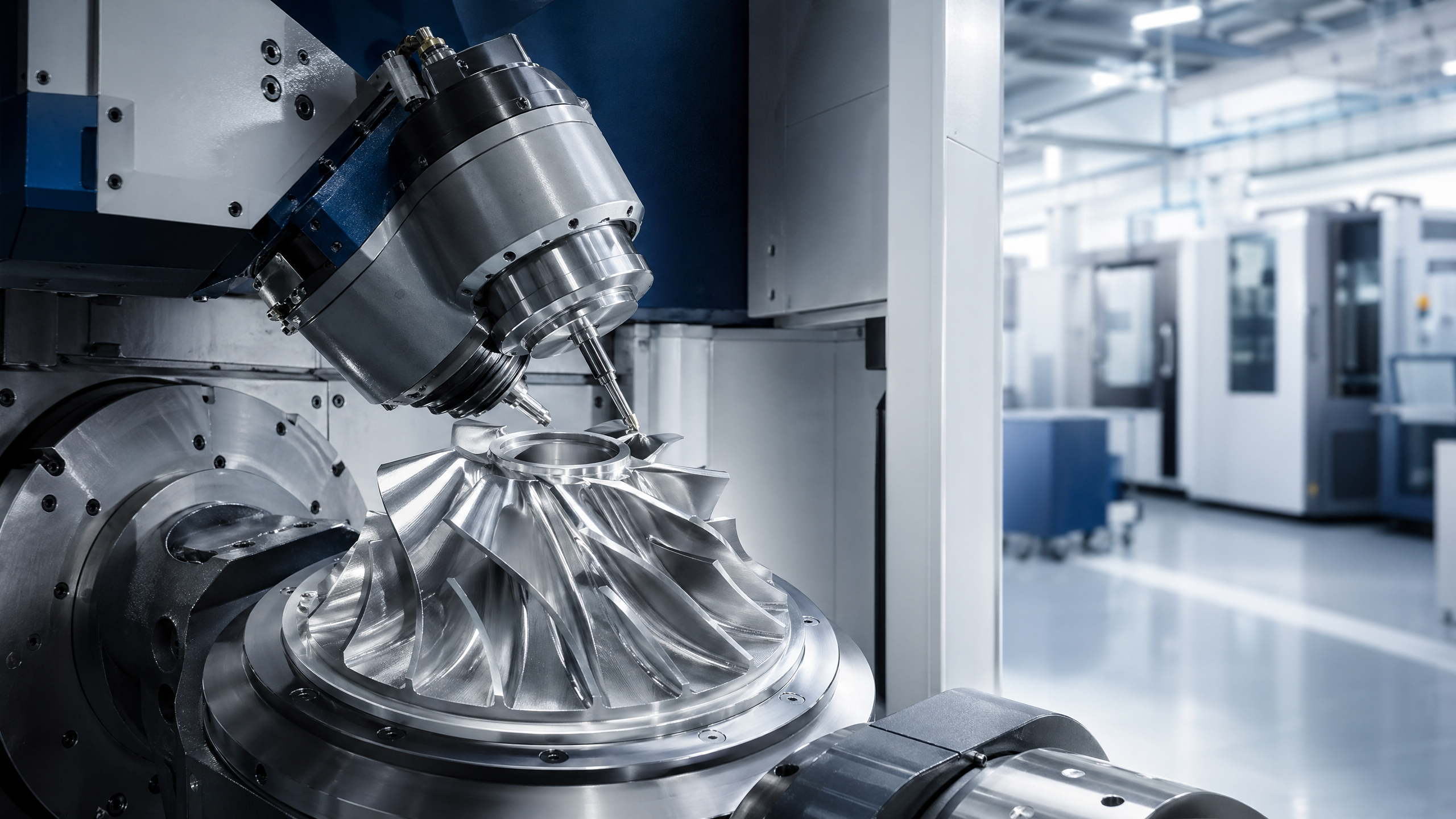
In impeller production, 5 axis machining solves a very specific set of manufacturing problems: it makes complex blade shapes easier to machine accurately, reduces repositioning errors, improves surface finish, and helps manufacturers achieve more stable quality at scale. For engineers, buyers, operators, and business evaluators, the real value is not just “more axes,” but better control over precision, consistency, lead time, and total production risk in demanding industries such as aerospace, energy equipment, and turbomachinery.
If you are evaluating whether 5 axis machining for impeller manufacturing is worth the investment or sourcing premium, the short answer is this: when impeller geometry is complex and tolerance requirements are high, 5-axis capability is often the most practical way to reduce manual intervention, lower scrap risk, and improve part quality.
What problems does 5 axis machining actually solve in impeller manufacturing?
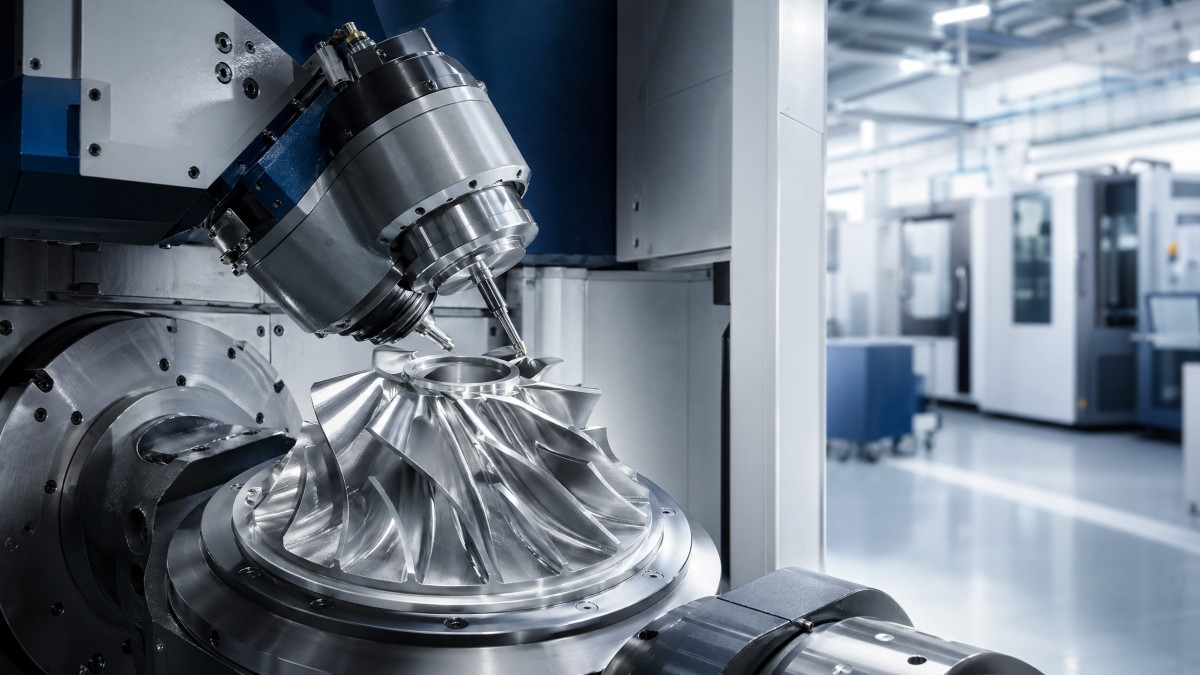
Users searching this topic usually are not looking for a general definition of 5-axis CNC. They want to know what practical problems it solves on real impeller parts. In most cases, the answer comes down to five recurring manufacturing challenges.
1. Machining complex blade geometry
Impellers often feature twisted blades, deep channels, narrow passages, and continuously changing curvature. These features are difficult to access with conventional 3-axis machining and still challenging with indexed 4-axis setups. A multi-axis CNC manufacturing approach allows the cutting tool to stay aligned to the blade surface from multiple angles, which improves access and control across the full part geometry.
2. Reducing setup-related errors
Every time a part is removed and re-clamped, the risk of positional deviation increases. In impeller manufacturing, even small misalignment can affect blade thickness, hub concentricity, flow passage geometry, and overall balance. 5-axis machining reduces the number of setups, which directly improves geometric consistency and lowers cumulative error.
3. Improving surface consistency on blade profiles
Impeller performance depends heavily on smooth, accurate flow surfaces. Poor surface finish can increase aerodynamic or hydraulic losses, while visible tool marks may require additional polishing or hand finishing. With continuous 5-axis toolpath control, manufacturers can maintain better tool contact and orientation, helping produce more uniform blade surfaces with less secondary processing.
4. Holding tight tolerances in difficult-to-reach areas
Many impellers require high precision across blade leading edges, trailing edges, fillets, and transition zones. These are exactly the areas where limited tool access causes problems in simpler machining methods. A high precision machine tool with 5-axis capability improves reach and positioning flexibility, making it easier to maintain tolerances across the full impeller form rather than only on easily accessible surfaces.
5. Shortening cycle time for complex parts
Although 5-axis machines are more advanced, they often improve overall efficiency in impeller production because they reduce setup changes, manual repositioning, extra fixtures, and post-machining rework. For low-volume high-value parts, and especially for aerospace or energy applications, this can produce a meaningful advantage in lead time and delivery reliability.
Why is impeller manufacturing especially suited to 5-axis CNC?
Not every part needs 5-axis machining, but impellers are one of the clearest examples where the technology matches the manufacturing challenge.
Unlike flat plates or simple prismatic components, impellers combine several difficult characteristics in one part:
- Freeform blade surfaces
- Multiple deep and narrow flow channels
- High surface quality requirements
- Strict profile and positional tolerances
- Sensitivity to imbalance and geometric inconsistency
Because of this, impeller production often exposes the limitations of traditional CNC processes very quickly. A shop may be able to machine some areas of the part on 3-axis equipment, but tool interference, poor reach, inconsistent surface quality, or repeated setups often become bottlenecks. 5-axis machining addresses these constraints directly by allowing simultaneous rotational and linear movement that keeps the cutter in a better orientation throughout the process.
For manufacturers serving aerospace, compressors, pumps, turbines, and energy equipment, this capability is not just about machining feasibility. It also affects process stability, inspection results, throughput, and long-term cost control.
What benefits matter most to buyers, engineers, and operators?
Different decision-makers look at 5 axis machining from different angles, but they usually care about a similar set of outcomes.
For buyers and sourcing teams: lower production risk
From a purchasing perspective, the biggest concern is often not machine theory but supplier reliability. Can the supplier produce the part consistently? Can they hold tolerance without repeated corrections? Will delivery slip because of rework or setup complexity?
In many impeller projects, 5-axis capability reduces the risk of quality variation by simplifying the production route. Fewer setups usually mean fewer opportunities for cumulative positioning error, fixture-related distortion, or manual handling damage.
For engineers: better control of geometry and process capability
Design and manufacturing engineers care about whether the process can reproduce the intended blade form accurately. 5-axis machining supports better toolpath strategies for complex surfaces, which helps maintain profile accuracy, smooth transitions, and more consistent wall thickness in sensitive blade regions.
For operators: easier access and fewer workarounds
On the shop floor, operators benefit when the machine can approach difficult surfaces more naturally. Instead of relying on multiple custom fixtures, awkward long tools, or repeated manual intervention, the machine can use coordinated axis motion to reach more features efficiently. This can improve both safety and process repeatability.
For business evaluators: stronger ROI on high-value parts
The cost of 5-axis equipment is higher, but so is the cost of failure in impeller manufacturing. Scrap, long setup time, missed tolerances, balancing issues, and delayed delivery all add hidden costs. For complex impellers, the return on 5-axis investment often comes from reducing these losses rather than from machine speed alone.
How does 5 axis machining improve quality in impeller parts?
Quality improvement is one of the strongest reasons manufacturers adopt 5-axis machining for impellers. The effect is usually visible in several areas at once.
Better blade profile accuracy
Continuous multi-axis motion allows the cutter to follow the designed surface more precisely, especially on curved blade regions and complex transitions. This helps preserve the intended aerodynamic or fluid-dynamic performance of the impeller.
More uniform surface finish
When tool orientation is optimized throughout the cut, scallop height and cutting engagement can be controlled more consistently. That often leads to smoother surfaces and less manual polishing.
Reduced vibration and tool deflection
Because the machine can position the tool more effectively, it is often possible to use shorter, more stable tool engagement compared with less flexible machining methods. This can reduce chatter and improve dimensional stability.
Improved consistency from part to part
For production environments, repeatability matters as much as single-part accuracy. A well-programmed precision CNC manufacturing process based on 5-axis machining can produce more consistent results across batches, which is critical for regulated or performance-sensitive industries.
When is 5 axis machining worth the cost for impeller manufacturing?
This is often the key commercial question. 5-axis machining is not automatically the best choice for every impeller, but it becomes highly valuable under certain conditions.
It is usually worth serious consideration when:
- The blade geometry is highly complex or deeply curved
- Tolerances are tight across multiple surfaces
- Surface finish requirements are high
- The material is difficult to machine
- Rework or scrap costs are significant
- Delivery schedules are tight
- The part is used in aerospace, energy, or other critical applications
By contrast, if the impeller is relatively simple, tolerance demands are moderate, and production economics are highly cost-sensitive, a less advanced process may still be acceptable. The important point is to evaluate the total manufacturing path, not just the hourly machine rate.
In practice, many companies discover that the apparent higher cost of 5-axis machining is offset by fewer setups, lower inspection failure rates, less manual finishing, and better delivery predictability.
What should you check when selecting a 5-axis impeller machining supplier or solution?
If you are assessing a supplier, machine platform, or production partner, ask questions that go beyond whether they “have a 5-axis machine.” Capability depends on the full process, not just the equipment label.
Look at actual impeller experience
Machining an impeller is different from machining general 5-axis parts. Ask whether the supplier has experience with similar blade structures, materials, and tolerance levels.
Review machine stability and accuracy
For critical impellers, machine kinematics, thermal stability, spindle performance, and calibration quality all matter. A strong high precision machine tool platform is essential for repeatable results.
Evaluate CAM programming capability
Good hardware alone is not enough. Toolpath strategy, collision control, step-over optimization, and tool orientation planning have a major effect on quality and cycle time.
Ask about inspection and verification
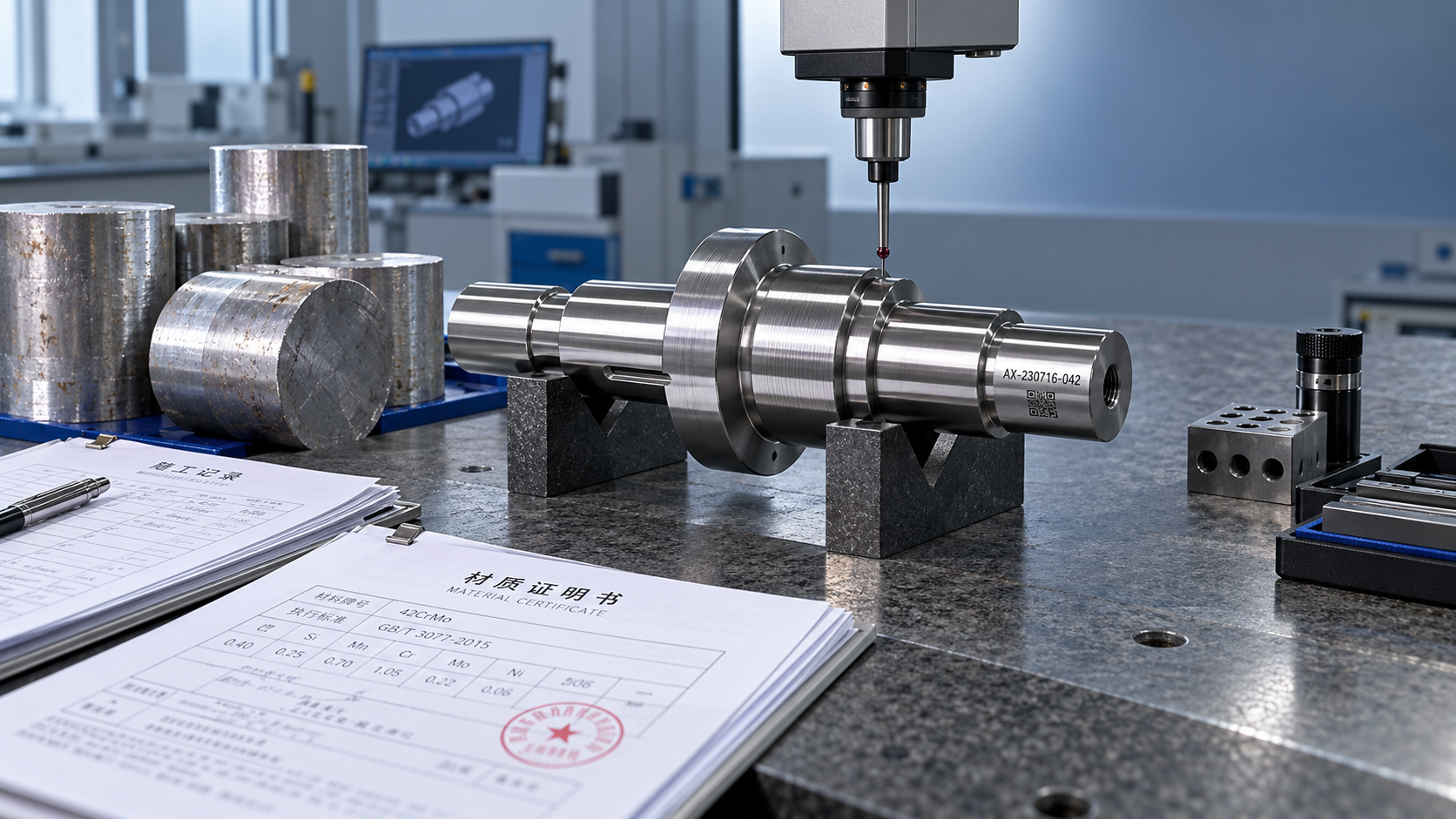
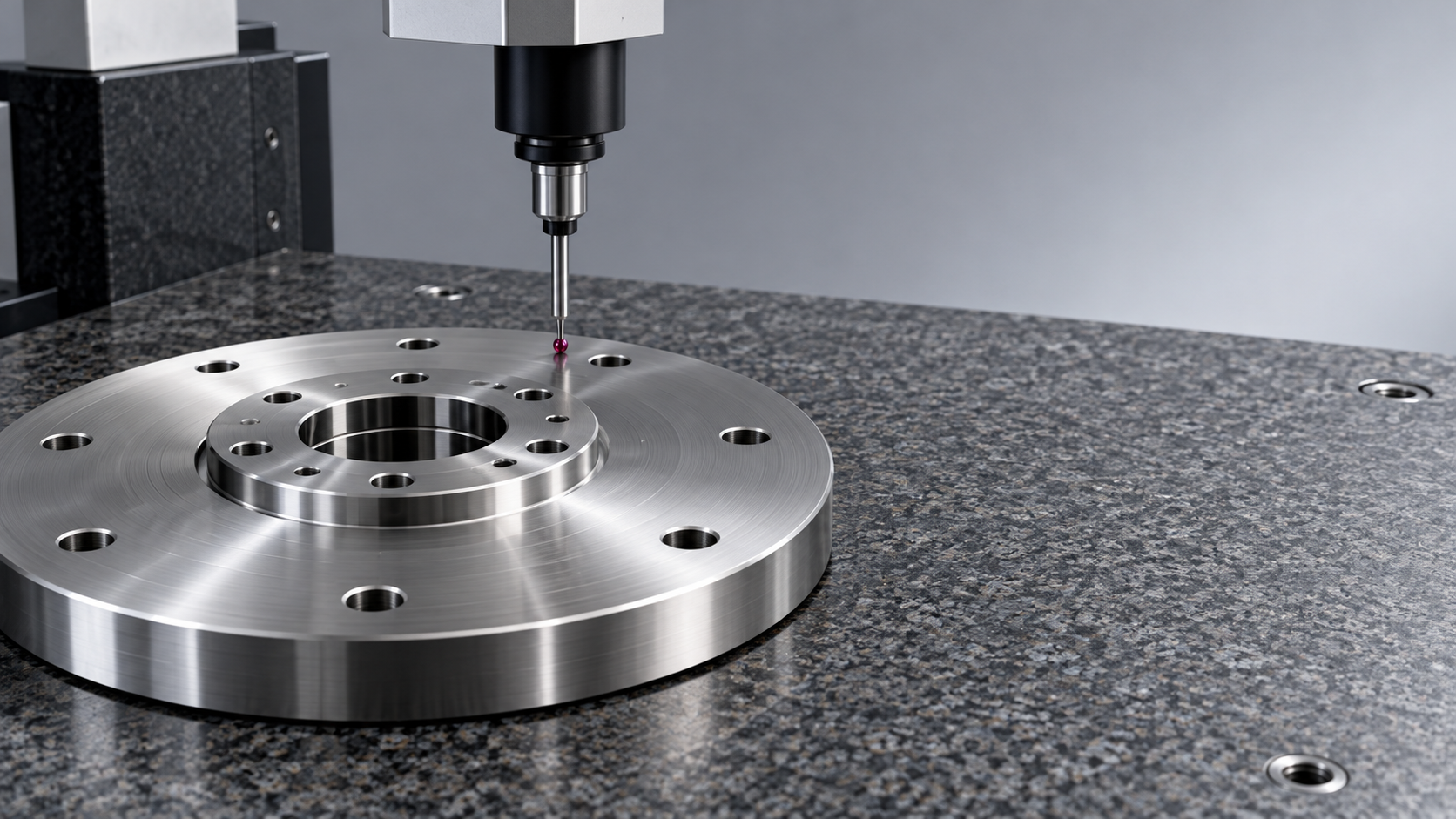
Impeller quality should be confirmed using appropriate inspection methods, such as CMM measurement, profile verification, and surface quality checks. For critical applications, process documentation is also important.
Understand fixture and tooling strategy
Secure workholding and proper tool selection influence vibration, deformation, and accessibility. A capable supplier should be able to explain how the impeller is fixtured and how difficult blade regions are machined.
Check material capability
Impellers may be made from aluminum, stainless steel, titanium, nickel-based alloys, or specialty materials. Each introduces different cutting challenges, and supplier experience with your target material should be verified.
Common concerns about 5 axis impeller machining—and how to think about them
Decision-makers often have reasonable concerns before committing to 5-axis production. Here is how to frame the most common ones.
“Is it too expensive?”
It can be more expensive per machine hour, but total part cost may be lower once you account for setup reduction, lower scrap, better finish, and less rework.
“Is programming too difficult?”
Programming is more advanced, but mature CAM software and experienced process engineers make a major difference. Complexity in programming is often what enables simplicity in production.
“Will it really improve consistency?”
In many impeller applications, yes—provided the machine, tooling, fixturing, toolpaths, and inspection system are all properly controlled.
“Can we use it for both prototypes and production?”
Yes. 5-axis machining is widely used for prototype development, small-batch high-mix production, and high-value recurring parts. Its flexibility is one of its main strengths.
Final takeaway: what 5 axis machining solves in impeller manufacturing
5 axis machining for impeller manufacturing solves the problems that matter most in real production: difficult blade access, setup-related inaccuracy, inconsistent surface finish, tolerance challenges, and inefficient processing of complex geometries. For industries where impeller performance and manufacturing reliability are critical, it is often the most practical route to stable quality.
For buyers, it reduces sourcing risk. For engineers, it improves control over complex geometry. For operators, it simplifies difficult machining tasks. For business evaluators, it can deliver value through lower rework, stronger consistency, and better delivery performance.
If the impeller is geometrically complex and application-critical, 5-axis machining is not just an advanced option—it is often the process that makes dependable production possible.
PREVIOUS ARTICLE
Recommended for You
![]() Mitsubishi Electric Announces Physical AI System Linking Humanoid Robots and CNC MachinesMachine Tool Industry Editorial Team
 Precision Machining for Defense: Supplier Quality and Traceability ChecksManufacturing Market Research Center
![]() Nidec Machine Tool Launches MVR-5X Five-Axis Gantry MachineMachine Tool Industry Editorial Team
 Choosing a Precision Disc Parts Manufacturer in China: Tolerances and Quality ChecksManufacturing Market Research Center
![]() Siemens Executive Says AI Could Raise Factory Automation to 80%Manufacturing Market Research Center
 Choosing Automated Machine Tools for High-Mix, Low-Volume ProductionMachine Tool Industry Editorial Team


Aris Katos
Future of Carbide Coatings
15+ years in precision manufacturing systems. Specialized in high-speed milling and aerospace grade alloy processing.
▶
Choosing a CNC Machine for Mold Making: Accuracy, Rigidity, and Surface FinishCNC Machining Technology Center▶
How to Cut CNC Machining Energy Use per Part Without Longer Cycle TimesCNC Machining Technology Center▶
Will a Mazak CNC retrofit work with your existing servo drives?CNC Machining Technology Center▶
Do energy-efficient machine tools reduce power use at partial load?CNC Machining Technology Center▶
Comparing energy-efficient machine tools by energy use per partCNC Machining Technology Center
▶
Mastering 5-Axis Workholding Strategies
Join our technical panel on Nov 15th to learn about reducing vibrations in thin-wall components.

Providing you with integrated sanding solutions
Before-sales and after-sales services
Comprehensive technical support