• Global CNC market projected to reach $128B by 2028 • New EU trade regulations for precision tooling components • Aerospace deman
NYSE: CNC +1.2%LME: STEEL -0.4%

What Should You Check When a CNC Machine Arrives at Your Factory?
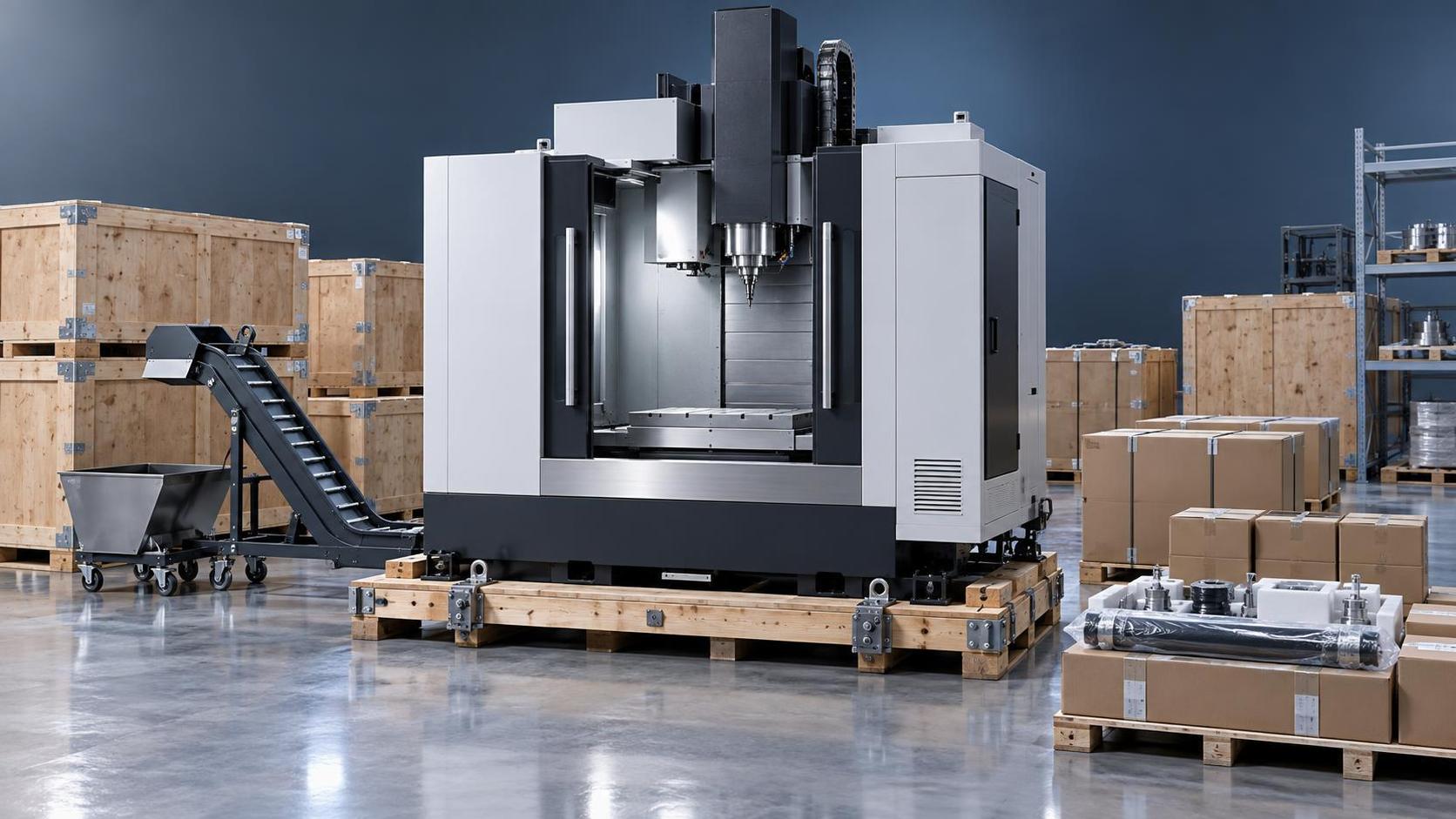
A new CNC machine arriving at the factory is usually a moment of optimism: a larger capacity plan is becoming real, a bottleneck may finally be removed, and the first production schedule is already waiting. Yet the receiving stage is also where small oversights can become expensive delays. A dented enclosure, a missing rotary-axis cable, an incompatible transformer, or an undocumented control parameter may not stop the truck from unloading—but each can complicate installation, commissioning, and future warranty discussions.
If you are asking, “what should I check when a CNC machine arrives at factory?”, the short answer is: check the shipment before it is accepted, verify that the delivered equipment matches the purchase order, protect the machine from improper handling, and create a documented record before installation begins. This is especially important for machining centers, CNC lathes, multi-axis systems, and automated cells, where machine performance depends on far more than the main unit alone.
The best receiving inspection is not a rushed checklist completed while the carrier waits. It is a coordinated handover involving purchasing, maintenance, production, quality, and, where appropriate, the supplier’s service representative.
Prepare Before the Truck Reaches the Gate
A reliable arrival inspection starts before delivery day. Confirm the expected delivery date, machine dimensions, gross shipment weight, lifting points, package count, unloading method, and the contact details of the freight carrier and supplier. The receiving team should know whether the shipment includes one crated machine or several separate packages containing a chip conveyor, coolant system, bar feeder, robot interface, tool magazine components, electrical cabinet, tooling, and documentation.
Review the approved purchase order and technical specification in advance. Keep a printed or digital copy available at the unloading area. It should identify the agreed machine model, control system, spindle configuration, axis travel, optional equipment, voltage requirements, accessories, and acceptance conditions. Do not rely on memory or a sales quotation alone; the final order confirmation is the working reference.
Also inspect the route from the receiving dock to the installation site. A CNC machine may be too heavy for a standard forklift, too tall for a doorway, or too wide for a planned turning point. Check floor load capacity, door clearances, ceiling obstructions, crane availability, and foundation readiness. Moving a machine twice because the final path was not validated adds risk without adding value.
At Delivery: Inspect the Shipment Before Signing Without Exception
Before unloading, compare the number of crates, pallets, and loose items with the packing list and bill of lading. Look carefully at the external condition of every package. Damage is not always dramatic. Torn shrink wrap, crushed crate corners, broken seals, moisture staining, oil marks, shifted loads, and puncture holes can all indicate rough handling or exposure during transit.
If any package appears compromised, photograph it from multiple angles before it is moved. Include wide shots that show the full crate, close-ups of the affected area, labels, serial numbers, and the truck or container where relevant. Note the time, date, carrier name, and names of witnesses. If a shock indicator or tilt indicator has been triggered, record that as well.
Never sign a delivery receipt as “received in good condition” if damage is visible or the package count is incomplete. Instead, write a clear exception such as “received with visible crate damage; internal inspection pending” or “one accessory crate missing from packing list.” A general note like “subject to inspection” may not be sufficient for a freight claim, depending on local carrier terms.
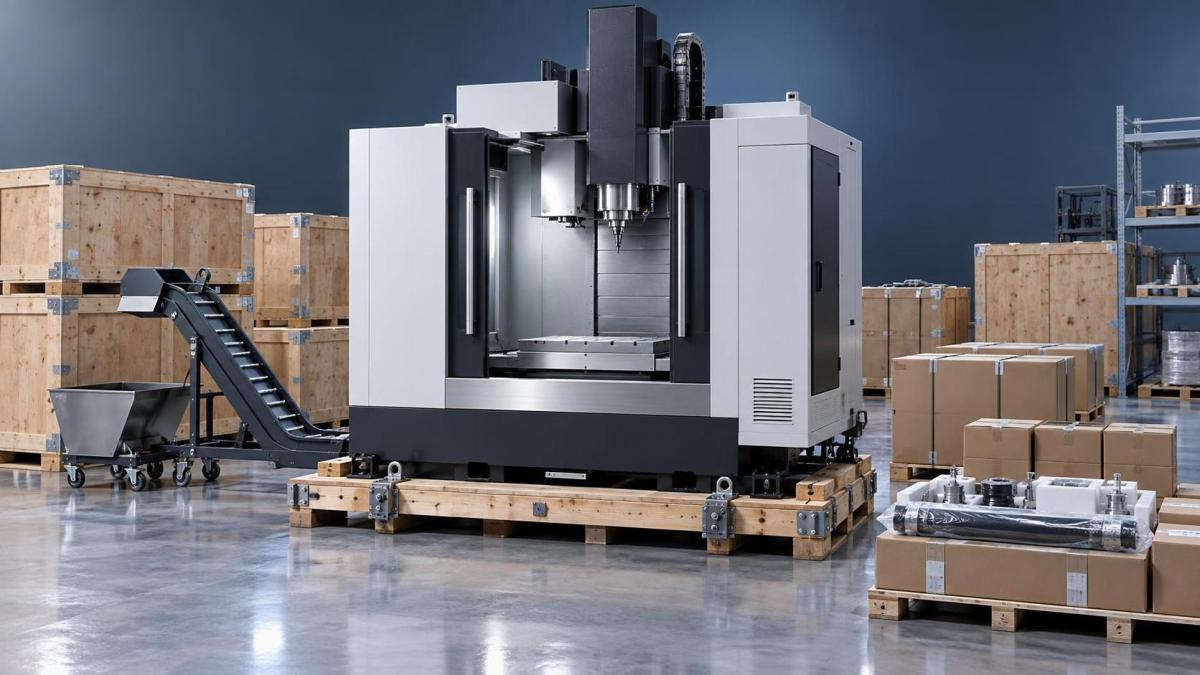
Take care during unloading. Use only the lifting instructions supplied by the manufacturer. CNC machines have concentrated weight, sensitive castings, precision guideways, and protruding assemblies that can be damaged by an incorrectly positioned fork or sling. Do not lift from sheet-metal covers, guards, coolant tanks, or a spindle housing unless the manufacturer explicitly identifies those points. Keep the machine upright unless shipment markings state otherwise.
What to document at the receiving dock
- Carrier condition, delivery time, and shipment reference numbers
- Number of packages received versus the packing list
- Visible damage, water exposure, broken seals, or activated impact indicators
- Photographs of labels, crates, and any irregularities
- Exceptions written on the carrier’s proof of delivery
- Temporary storage location and any environmental concerns
Confirm That the Machine Is the Machine You Ordered
Once the equipment is safely placed in a clean staging area, verify its identity. Match the machine nameplate and serial number against the supplier’s shipping documents, commercial invoice, order confirmation, and warranty registration documents. This step sounds obvious, but it matters when a factory receives several machines, similarly configured units, or equipment delivered through a distributor.
Then compare the actual configuration with the agreed specification. For a vertical or horizontal machining center, confirm spindle taper, spindle speed range, tool magazine capacity, axis travels, table dimensions, probing options, chip management equipment, coolant delivery, and controller model. For a CNC lathe, confirm chuck size, spindle bore, turret configuration, tailstock or sub-spindle arrangement, live tooling, parts catcher, bar feeder interface, and automation options.
Pay particular attention to options that may be physically present but not yet activated in software. A fourth or fifth axis, high-pressure coolant, tool measurement system, remote monitoring module, or robot communication package may require a license, parameter set, or commissioning procedure. Record what is installed, what is supplied separately, and what remains to be enabled.
Open Crates Methodically, Not All at Once
It is tempting to remove all packaging quickly so the installation team can begin. A more disciplined approach is safer. Open one crate or package at a time, keep components grouped, and check each item against the packing list before disposing of protective materials. Small items are frequently separated from the main machine: leveling pads, anchor bolts, electrical plugs, hydraulic fittings, maintenance tools, manuals, spare fuses, and control pendants can disappear easily in a busy shop.
Inspect exposed surfaces for corrosion, scratches, cracked covers, broken connectors, loose wiring, damaged cable carriers, bent sheet metal, or signs that shipping restraints shifted. Check whether protective grease or anti-rust coating is present where expected. Moisture inside a crate deserves immediate attention, particularly around electrical cabinets, linear scales, motors, and precision ground surfaces.
Do not remove transport brackets, spindle restraints, axis locks, or shipping bolts until the manufacturer’s installation instructions say to do so. These restraints are designed to protect ballscrews, guideways, turrets, and moving assemblies during transport. Removing them before the machine is properly positioned can create avoidable handling risk.
Check Utilities Before the Installer Is Waiting
Many commissioning delays have nothing to do with the CNC machine itself. The equipment arrives ready, but the factory is not. Compare the machine’s utility requirements with the actual conditions at the installation point before the service engineer arrives.
Electrical supply is the first priority. Verify voltage, phase, frequency, grounding method, breaker capacity, cable size, disconnect location, and transformer requirements. A machine intended for one regional electrical standard should not be connected to another without a properly specified solution. Confirm whether the machine requires a clean earth, an isolation transformer, surge protection, or voltage stabilization.
Compressed air quality and pressure also matter. Check the required air pressure, flow, filtration, and moisture control. Water or oil contamination in the air supply can affect pneumatic valves, tool clamping, spindle functions, and automatic doors. If hydraulic power, central coolant, dust extraction, mist collection, or process gas is required, verify these connections as part of the same readiness review.
Environmental conditions deserve equal attention. The machine should be protected from direct sunlight, excessive vibration, major temperature swings, airborne abrasive dust, and nearby welding interference. Precision manufacturing equipment does not need a laboratory, but it does need a stable, sensible operating environment. If the machine will produce close-tolerance aerospace, energy, medical, or electronics components, shop conditions can directly affect repeatability and inspection results.
Review the Documents That Will Matter Six Months From Now
Receiving a CNC machine is also receiving a long-term service asset. Gather all documents into a controlled location, ideally linked to the factory’s maintenance or asset-management system. Missing paperwork may seem inconvenient on day one; during a fault, audit, relocation, or resale, it becomes much more significant.
Your document package should include the operation manual, maintenance manual, electrical and pneumatic schematics, foundation or installation drawing, packing list, warranty terms, certificate of conformity where applicable, controller documentation, parameter backup, ladder or PLC backup when supplied, software license information, and recommended preventive-maintenance schedule.
Ask the supplier how control backups will be handled. A CNC control may contain machine-specific parameters, offset settings, PLC logic, servo configuration, safety settings, and communication details. Establish who retains the master backup, what format is used, and how the factory can restore it if a control memory failure occurs. This is a practical safeguard, not an administrative extra.
Do Not Confuse Arrival Inspection With Final Acceptance
A machine can arrive undamaged and still require a formal acceptance process after installation. Receiving inspection confirms shipment condition and completeness. Site acceptance confirms that the machine performs as specified in your facility.
During commissioning, observe leveling, geometry checks, spindle runout verification, axis movement, lubrication, hydraulic and pneumatic functions, coolant operation, safety interlocks, door locks, emergency stops, alarms, tool changer cycles, and chip evacuation. Where the contract includes accuracy standards or test cuts, make sure they are documented before final sign-off.
For multi-axis machines and automated production systems, test the full sequence rather than isolated components. A robot interface may appear connected but fail during a cycle-start handshake. A pallet changer may move correctly but not exchange reliably under production timing. A bar feeder, probe, or tool presetter should be validated with representative workpieces and programs, not merely powered on.
It is wise to involve the people who will operate and maintain the machine every day. Operators often notice ergonomic issues, unclear alarm behavior, awkward material loading, or program-management gaps that are invisible during a formal demonstration. Maintenance staff can identify access concerns for filters, lubrication points, electrical panels, and chip conveyor service.
Common Mistakes That Create Avoidable Disputes
The most common mistake is signing freight paperwork too quickly. Another is accepting verbal reassurance instead of documenting discrepancies in writing. Teams also sometimes focus entirely on the machine and forget the peripheral equipment that makes it productive: tooling, fixtures, coolant, chip handling, air preparation, measurement probes, and software connectivity.
There is also a tendency to start cutting parts immediately after power-on. That can be understandable when production pressure is high, but it risks masking installation issues and complicating responsibility. Allow the machine to be leveled, warmed up, checked, and accepted according to the agreed procedure. The first parts should confirm process capability, not simply prove that the spindle turns.
A Practical Receiving Rule: Record First, Resolve Second
When something is missing, damaged, or unclear, avoid guessing. Record the issue, preserve the evidence, notify the responsible supplier contact promptly, and agree on the corrective path. That may involve replacement parts, a field service visit, a revised document package, or a freight claim. Clear records protect both the buyer and the supplier because they establish what was delivered and when the condition was observed.
Ultimately, the answer to what should I check when a CNC machine arrives at factory is not limited to a single inspection point. Check the delivery condition, configuration, accessories, handling process, utilities, documents, and commissioning readiness as one connected process. A CNC machine is a precision production system, not just a large item of capital equipment. Treating arrival day with the same discipline applied to machining quality gives the machine a far better start—and gives the factory a stronger foundation for reliable production.
PREVIOUS ARTICLE
NEXT ARTICLE
Recommended for You
 How to Select a CNC Lathe for Small Parts Without Sacrificing Accuracy or Cycle TimeCNC Machining Technology Center
 How to Select a Slant Bed Lathe for High-Precision Shaft and Chuck WorkCNC Machining Technology Center
 Smart Manufacturing for Small Businesses: Where Automation Delivers the Fastest ROIMachine Tool Industry Editorial Team
 How to Specify a CNC Lathe for High-Volume Automotive Shaft ProductionCNC Machining Technology Center
 How Automated Precision Machining Maintains Tolerance in High-Mix ProductionCNC Machining Technology Center
 How to Evaluate a Machine Tool Factory Before Sourcing CNC EquipmentGlobal Machine Tool Trade Research Center




Aris Katos
Future of Carbide Coatings
15+ years in precision manufacturing systems. Specialized in high-speed milling and aerospace grade alloy processing.
▶
What Should You Check When a CNC Machine Arrives at Your Factory?CNC Machining Technology Center▶
What Safety Checks Are Required for CNC Cutting Operations?CNC Machining Technology Center▶
What Are Machine Tools? Common Types, Functions, and Typical Shop ApplicationsCNC Machining Technology Center▶
CNC Industrial Machines Maintenance Checklist: How to Reduce Downtime and Tool WearCNC Machining Technology Center▶
What Is Industrial Machining? Common Processes, Materials, and Typical UsesCNC Machining Technology Center
Mastering 5-Axis Workholding Strategies
Join our technical panel on Nov 15th to learn about reducing vibrations in thin-wall components.

Providing you with integrated sanding solutions
Before-sales and after-sales services
Comprehensive technical support