• Global CNC market projected to reach $128B by 2028 • New EU trade regulations for precision tooling components • Aerospace deman
NYSE: CNC +1.2%LME: STEEL -0.4%

How to Improve Aluminum Alloy Machining Efficiency
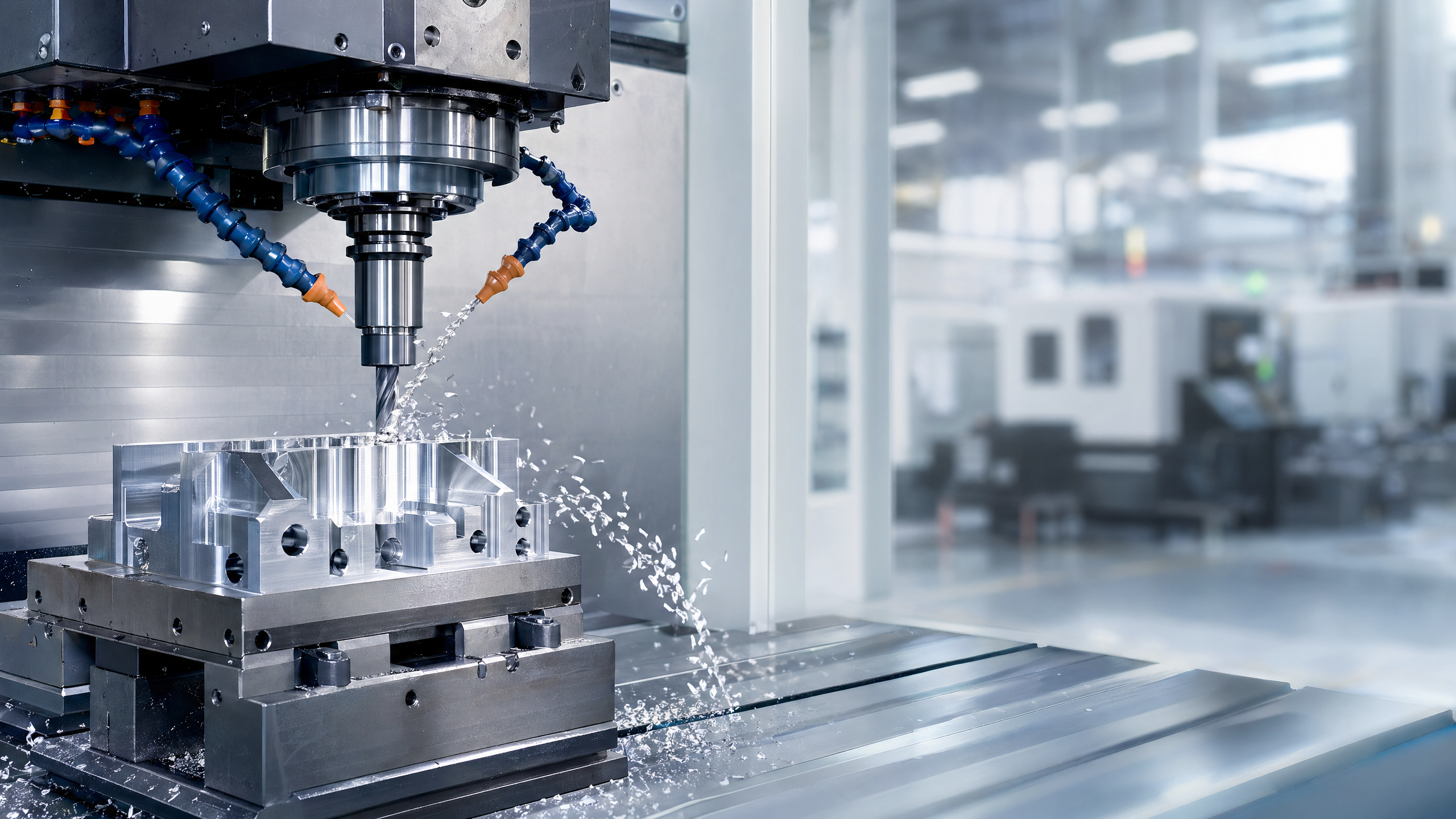
Improving aluminum alloy machining efficiency is not just about increasing spindle speed. In most real production environments, efficiency comes from matching the right toolpath, tool material, cutting parameters, machine rigidity, clamping method, coolant strategy, and setup process to the specific aluminum grade and part geometry. For operators, buyers, and manufacturing decision-makers, the fastest gains usually come from reducing non-cutting time, preventing built-up edge, improving chip evacuation, and using machine tools that support stable high-speed CNC manufacturing. When these factors are aligned, manufacturers can shorten cycle time, maintain surface finish, reduce tool wear, and improve overall production economics.
What Actually Improves Aluminum Alloy Machining Efficiency?
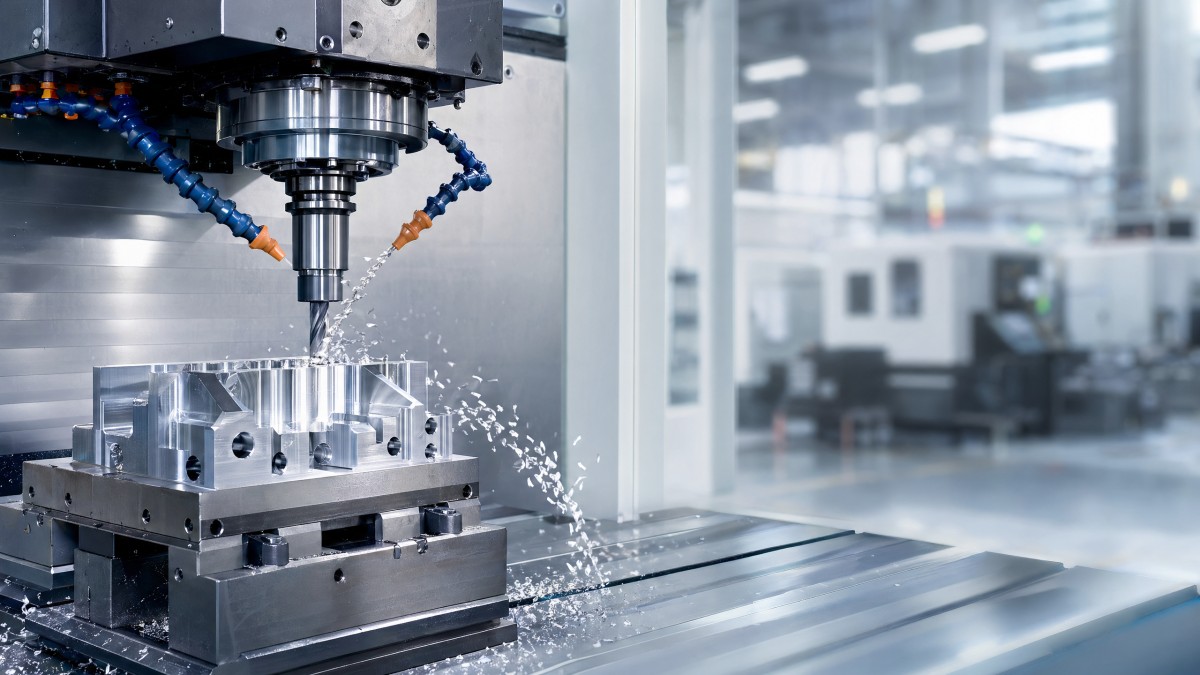
The core search intent behind this topic is practical: readers want to know which actions produce measurable efficiency gains in aluminum alloy machining, and how to evaluate whether a machine, process, or supplier can deliver them reliably.
In practice, machining efficiency improves when manufacturers focus on five high-impact areas:
- Higher material removal rates without losing stability
- Shorter setup and workholding time
- Better chip control and lower tool wear
- Fewer quality defects and less rework
- Smarter process integration through multi-axis CNC manufacturing and automation
For aluminum alloys, this matters even more because the material is relatively easy to cut, but it also presents typical problems such as burr formation, built-up edge, chip adhesion, and surface damage if the process is not optimized. That is why an efficient machining process for aluminum alloys depends less on one single factor and more on process coordination.
Which Factors Have the Biggest Impact on Cycle Time and Output?
If the goal is to improve throughput, the biggest drivers are usually not hidden in theory. They are visible on the shop floor.
1. Cutting parameter optimization
Aluminum generally supports higher cutting speeds than many steels, but not every production line takes full advantage of that. When spindle speed, feed rate, axial depth, and radial engagement are too conservative, cycle time increases unnecessarily. When they are too aggressive for the machine structure or toolholder system, vibration, poor finish, and premature wear follow.
The right approach is to optimize parameters based on:
- Aluminum alloy grade
- Part wall thickness and geometry
- Machine spindle capability
- Tool diameter and flute design
- Workholding rigidity
For many shops, one of the quickest gains comes from validating higher feed strategies with proper tooling instead of simply increasing speed alone.
2. Reducing non-cutting time
In many CNC environments, true machining time is only part of the total cycle. Tool changes, part loading, probing, repositioning, and manual alignment can consume a significant share of total production time. Quick setup CNC manufacturing is therefore a major efficiency lever, especially in medium-mix or repeat-order production.
Useful improvements include:
- Standardized fixtures
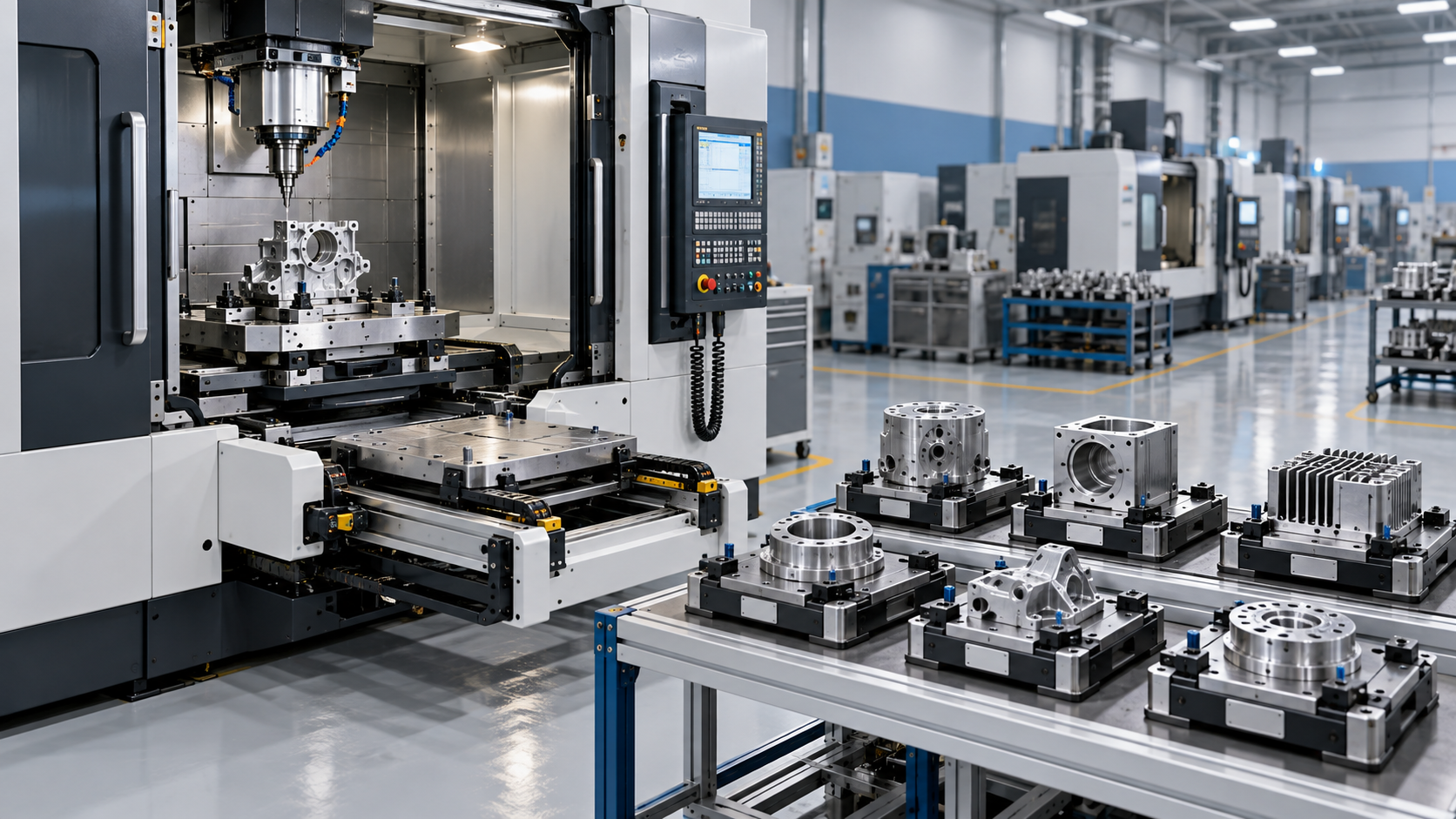
- Zero-point clamping systems
- Preset tools and offline programming
- Automatic probing and datum setting
- Pallet change or robotic loading where justified
3. Tool life consistency
Tool life affects both productivity and predictability. If tools fail unpredictably, efficiency drops through machine stoppages, scrap, and operator intervention. Stable tooling for aluminum should prioritize sharp cutting edges, proper rake geometry, polished flutes, and coatings or edge treatments suited to non-ferrous materials.
How Do Tooling and Cutting Strategy Affect Aluminum Machining Performance?
Tooling selection is one of the most important decisions in precision CNC manufacturing for aluminum parts. A machine may be fast, but poor tool geometry can still limit output.
Use tools designed specifically for aluminum
Aluminum machining usually benefits from tools with:
- High rake angles for lower cutting resistance
- Polished flutes to improve chip evacuation
- Sharp edges to reduce smearing and built-up edge
- Fewer flutes in roughing applications where chip clearance matters
General-purpose tools can work, but purpose-built aluminum tools often deliver better chip flow and allow more aggressive cutting conditions.
Choose the right toolpath strategy
Modern CAM strategies can significantly improve machining efficiency. High-efficiency roughing, adaptive clearing, and constant tool engagement paths help maintain more stable cutting loads. This allows higher feed rates and can reduce sudden tool overload.
For thin-wall or aerospace-style aluminum components, toolpath smoothness is especially important because unstable engagement causes deflection, chatter, and dimensional variation.
Control burrs and surface finish early
If burr removal or rework becomes a secondary operation, total efficiency suffers. Better cutting edge condition, optimized feeds, and proper tool exit planning can reduce burr formation directly in the CNC process. This is often more cost-effective than relying on downstream deburring labor.
Why Machine Tool Capability Matters More Than Many Buyers Expect
For procurement teams and business evaluators, a common mistake is comparing machines mainly on nominal speed or price. In aluminum alloy machining, actual efficiency depends on how well the machine sustains high-speed cutting under real production conditions.
Important machine characteristics include:
- Spindle speed and acceleration: important for high-speed CNC manufacturing and small-diameter tools
- Machine rigidity: critical for stable roughing and dimensional control
- Axis acceleration and jerk control: influences contouring speed and surface quality
- Thermal stability: affects consistency in long production runs
- Chip evacuation design: prevents recutting and machine contamination
- Controller capability: supports look-ahead, smooth interpolation, and efficient multi-axis motion
Multi-axis CNC manufacturing can bring major efficiency benefits for aluminum structural parts, housings, brackets, and complex geometries. By reducing multiple setups and enabling more faces to be machined in one clamping, 4-axis and 5-axis systems often improve both productivity and geometric accuracy.
For buyers, the real question is not “Is this machine fast?” but “Can this machine maintain speed, accuracy, and repeatability on my target aluminum parts?”
How Can Operators Reduce Common Aluminum Machining Problems?
Operators and process engineers often deal with the same recurring issues in aluminum machining. Solving them directly can produce immediate efficiency gains.
Built-up edge
This is one of the most common causes of unstable cutting and poor finish. It is often reduced by using sharper tools, suitable coatings or uncoated polished tools for aluminum, better lubrication, and parameters that avoid rubbing.
Chip adhesion and recutting
When chips are not cleared effectively, they can damage the machined surface and overload the tool. High-volume air blast, minimum quantity lubrication in suitable scenarios, or flood coolant with proper direction can help. The best solution depends on the part form and machine enclosure design.
Vibration in thin-wall parts
Thin aluminum components are common in aerospace, electronics, and lightweight structural applications. To reduce chatter and deformation:
- Use stable clamping without overdistortion
- Adjust tool engagement and step-over
- Reduce radial force with suitable cutter geometry
- Sequence roughing and finishing to preserve support where possible
- Use multi-axis positioning to improve tool access and stability
Surface damage and dimensional instability
These problems are often linked to heat, poor tool condition, spindle runout, or unstable fixturing. A repeatable process matters more than one-time success. Shops that document parameter windows and setup standards usually achieve better long-term machining efficiency.
What Role Do Fixtures, Automation, and Setup Speed Play?
In many production environments, machining efficiency is limited less by metal cutting and more by part handling. This is why quick setup CNC manufacturing has become a priority across automotive, electronics, and precision component production.
Efficient fixture design should help achieve:
- Fast loading and unloading
- Reliable repeat positioning
- Minimal obstruction to tool access
- Low deformation risk for softer aluminum parts
- Compatibility with automation if production volume increases
For higher-volume manufacturing, automated loading systems, pallet pools, and standardized workholding can sharply reduce idle machine time. For lower-volume but high-value parts, modular fixturing and faster changeover can deliver better overall equipment utilization.
How to Evaluate ROI When Upgrading an Aluminum Machining Process
For procurement and business evaluation roles, efficiency improvement should be judged with a broader view than spindle speed or hourly machine rate alone.
Useful evaluation metrics include:
- Cycle time per part
- Tool cost per part
- First-pass yield
- Setup time per batch
- Machine utilization rate
- Scrap and rework cost
- Energy consumption per output unit
Energy-saving machine tool solutions are becoming increasingly relevant, especially for manufacturers balancing cost control with sustainability goals. Efficient spindle systems, optimized axis drives, reduced air consumption, and shorter machine idle time can all contribute to lower operating cost. While energy savings alone may not justify an investment, combined gains in throughput, labor reduction, and quality often make the business case much stronger.
When comparing suppliers or machine configurations, readers should ask:
- What aluminum parts has this solution already proven on?
- What cycle time reduction is realistic under production conditions?
- How stable is the process across long runs?
- What tooling and fixture ecosystem is required?
- How difficult is operator training and maintenance?
Best Practices for Building an Efficient Machining Process for Aluminum Alloys
If the goal is consistent improvement rather than isolated optimization, the most effective approach is to build a repeatable process system.
Best practices include:
- Match machine capability to part type rather than buying based only on speed specifications.
- Use aluminum-specific tooling to improve chip evacuation and reduce edge build-up.
- Optimize toolpaths with stable engagement strategies instead of relying on outdated roughing methods.
- Shorten setup time through fixture standardization, probing, and process discipline.
- Improve chip and coolant management to protect surface quality and maintain stability.
- Apply multi-axis CNC manufacturing where it reduces setups and improves access for complex parts.
- Track total process performance using cycle time, quality, tool life, and machine utilization data.
For companies serving aerospace, automotive, consumer electronics, or industrial equipment markets, these improvements can strengthen both manufacturing capacity and commercial competitiveness.
In summary, the best way to improve aluminum alloy machining efficiency is to treat it as a full-process optimization problem rather than a simple parameter adjustment. Precision CNC manufacturing, high-speed CNC manufacturing, quick setup CNC manufacturing, and energy-saving machine tool solutions all create value when they are applied to the right part, machine, and production goal. For operators, the priority is stable cutting, chip control, and repeatable setup. For buyers and business evaluators, the priority is measurable ROI through shorter cycle time, better quality, and lower total cost per part. When these priorities are aligned, aluminum machining becomes not only faster, but more reliable and more profitable.
PREVIOUS ARTICLE
Recommended for You
![]() Mitsubishi Electric Announces Physical AI System Linking Humanoid Robots and CNC MachinesMachine Tool Industry Editorial Team
 Precision Machining for Defense: Supplier Quality and Traceability ChecksManufacturing Market Research Center
![]() Nidec Machine Tool Launches MVR-5X Five-Axis Gantry MachineMachine Tool Industry Editorial Team
 Choosing a Precision Disc Parts Manufacturer in China: Tolerances and Quality ChecksManufacturing Market Research Center
![]() Siemens Executive Says AI Could Raise Factory Automation to 80%Manufacturing Market Research Center
 Choosing Automated Machine Tools for High-Mix, Low-Volume ProductionMachine Tool Industry Editorial Team


Aris Katos
Future of Carbide Coatings
15+ years in precision manufacturing systems. Specialized in high-speed milling and aerospace grade alloy processing.
▶
How thermal drift affects accuracy in high-precision manufacturingCNC Machining Technology Center▶
Industrial Machining: Selecting Processes for Tight-Tolerance Metal PartsCNC Machining Technology Center▶
How Does Precision Machining Differ From Standard Machining?CNC Machining Technology Center▶
CNC Precision: Which Tolerances, Materials, and Processes Fit Your Part?CNC Machining Technology Center▶
How to Choose Metal Machining Processes for Tight Tolerances and Production VolumeCNC Machining Technology Center
▶
Mastering 5-Axis Workholding Strategies
Join our technical panel on Nov 15th to learn about reducing vibrations in thin-wall components.

Providing you with integrated sanding solutions
Before-sales and after-sales services
Comprehensive technical support