• Global CNC market projected to reach $128B by 2028 • New EU trade regulations for precision tooling components • Aerospace deman
NYSE: CNC +1.2%LME: STEEL -0.4%

Vertical lathe demand is rising in heavy industry again
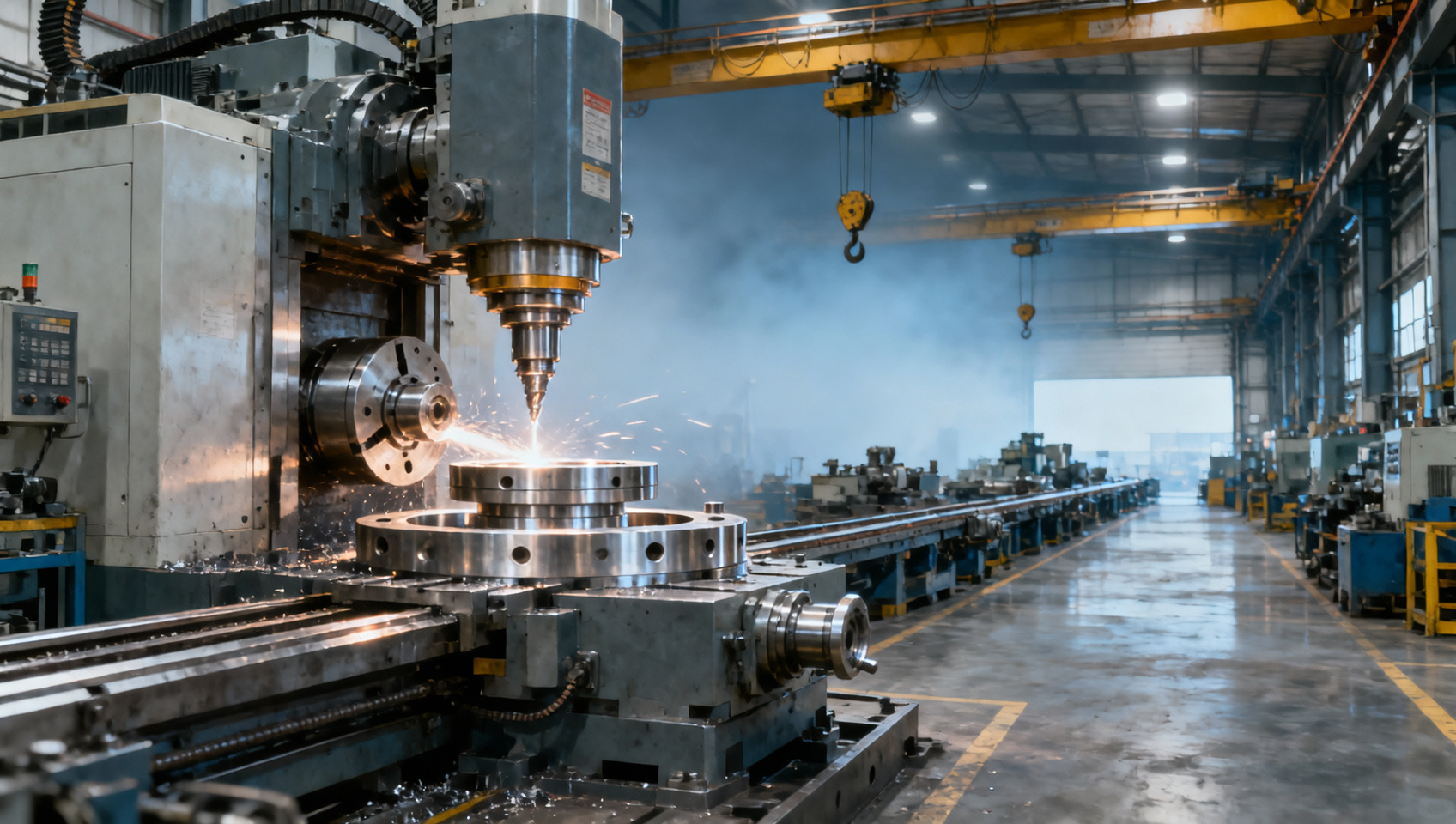
Demand for the vertical lathe is rising again across the Manufacturing Industry as heavy equipment makers upgrade metal machining capacity, improve automated production, and strengthen Global Manufacturing competitiveness. From industrial CNC workshops to large-scale CNC production lines, the industrial lathe is becoming a key solution for machining oversized parts, boosting precision, efficiency, and smarter production process control.
For market researchers, machine operators, procurement teams, and senior decision-makers, this renewed demand is not just a short-term equipment trend. It reflects a broader shift in heavy industry toward larger workpiece capacity, tighter tolerance control, lower manual intervention, and better integration with digital manufacturing systems.
In sectors such as energy equipment, aerospace, shipbuilding, rail transit, mining machinery, and large automotive component production, vertical turning technology is gaining attention because it can handle heavy discs, rings, housings, flanges, and structural parts that are difficult to machine on conventional horizontal systems. In many workshops, the vertical lathe is no longer viewed as a niche asset, but as a strategic production resource.
The key question is no longer whether vertical lathes matter, but how companies should evaluate demand, choose the right configuration, control project risk, and align investment with production targets. The sections below examine the market drivers, application logic, purchasing criteria, and implementation priorities behind the current rise in vertical lathe adoption.
Why Heavy Industry Is Turning Back to Vertical Lathes
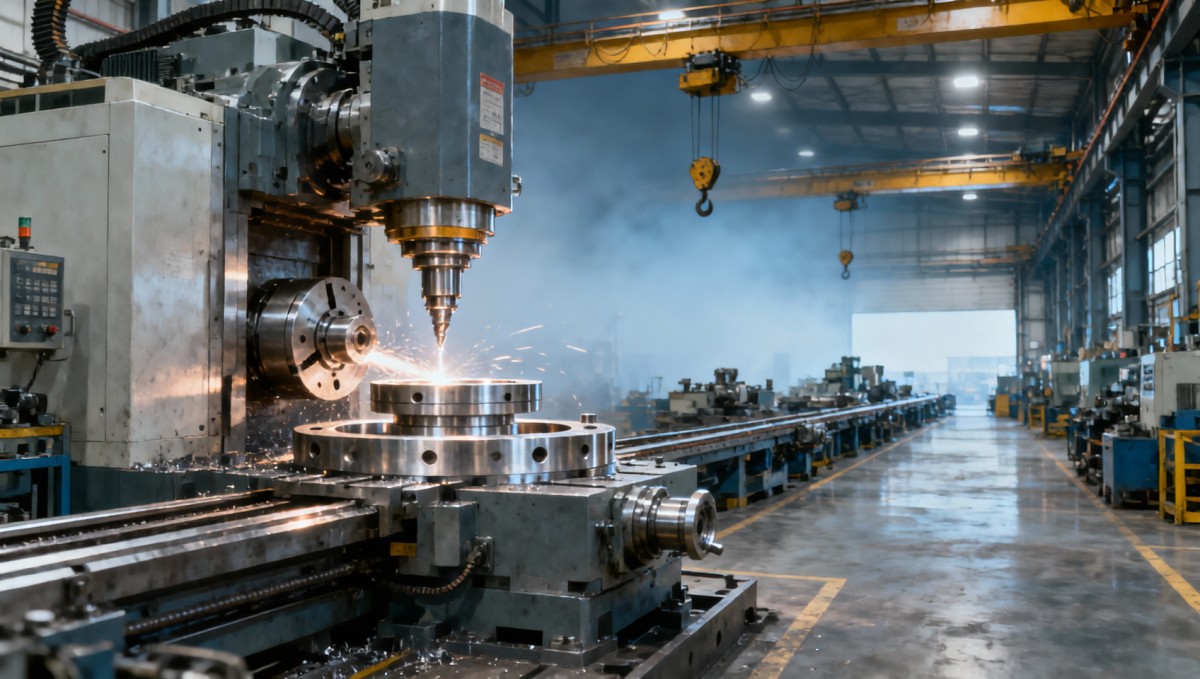
The renewed interest in vertical lathes is closely tied to changes in part size, material difficulty, and production economics. Heavy industry manufacturers are processing more components with diameters ranging from 800 mm to over 4,000 mm, while part weights in many applications now exceed 2 tons and can reach 20 tons or more in large energy and marine projects.
In these conditions, a vertical lathe offers a practical mechanical advantage. The workpiece sits on the table under its own weight, which improves clamping stability and reduces deformation risk compared with certain horizontal setups. For oversized rings, valve bodies, bearing housings, and turbine components, that stability directly affects roundness, flatness, and repeatability.
Another major driver is labor efficiency. In many factories, operators are expected to manage 2 to 3 machines at once, especially where automatic tool changers, in-process measurement, and programmable cycles are available. A modern CNC vertical lathe can reduce manual handling steps, shorten setup time by 15% to 30%, and improve process consistency across batches.
The investment case is also stronger than it was a few years ago. Heavy equipment manufacturers are under pressure to improve spindle utilization, reduce scrap on expensive forgings and castings, and integrate machining cells into smarter production environments. Vertical turning centers that support digital monitoring, tool life management, and linked loading systems fit well into this direction.
For procurement teams, the return is not only based on machine price. It includes fixture simplification, safer loading for large parts, lower rework rates, and better compatibility with automated production planning. When high-value workpieces are involved, even a 2% to 4% reduction in reject rate can meaningfully improve project profitability.
Key Industrial Signals Behind the Demand Recovery
- Larger component dimensions in wind power, hydro, oil and gas, and transport equipment manufacturing.
- Rising demand for precision machining of heavy rings, hubs, flanges, and face surfaces within ±0.02 mm to ±0.10 mm process windows, depending on application.
- Higher use of automated loading, multi-tool processes, and real-time production data tracking.
- Pressure to shorten delivery cycles from 10–12 weeks of machining backlog to 6–8 weeks in competitive supply chains.
Where the Pressure Is Strongest
The sectors showing the most active demand are usually those machining high-mass rotational parts. In wind energy, this includes tower flanges, yaw components, and bearing seats. In rail transit and mining, wheel hubs, gearbox housings, and brake discs are common examples. In aerospace and defense support manufacturing, structural rings and large precision discs also create demand for controlled vertical turning.
Companies in these industries are not only buying capacity. They are buying process reliability under heavy load, stable accuracy over longer cutting cycles, and the ability to standardize quality over 3 shifts or continuous production windows. That is why the vertical lathe is re-entering strategic capital expenditure discussions.
Core Application Scenarios and Production Advantages
Not every machining job requires a vertical lathe, but certain applications clearly benefit from it. The strongest fit appears when workpieces are large in diameter, relatively short in length, difficult to hold horizontally, or expensive enough that positioning security matters as much as cutting performance. This is common in both single-piece heavy machining and medium-volume batch production.
In practical workshop terms, vertical lathes are often chosen for face turning, boring, grooving, contouring, and drilling on heavy round parts. Advanced versions may also support live tooling or milling functions, which reduces secondary setups. For users running mixed part families, this flexibility can cut floor movement and improve internal logistics.
The table below shows where vertical lathes usually create the most value in heavy manufacturing environments. The comparison is especially useful for planners assessing machine utilization across multiple product categories.
The main takeaway is that vertical lathes are strongest where machine stability and large-part handling are more important than long-shaft processing. For plants machining ring-shaped or disc-shaped parts every day, the production logic is often clear. The machine becomes even more attractive when material cost is high and each setup error has a significant downstream cost.
Operational Benefits for Users and Supervisors
Operators generally benefit from more intuitive loading for heavy parts, especially when paired with overhead cranes, hydraulic chucks, and touch probes. In many factories, setup verification time can drop from 60–90 minutes to 30–50 minutes once fixture standards and CNC programs are stabilized.
Production supervisors value the repeatability. A stable vertical turning process can support more predictable cycle time planning, easier tool consumption control, and lower dependence on highly specialized manual adjustment. That matters in labor markets where experienced heavy machining talent is limited.
Common Limits to Consider
- A vertical lathe is not always the best choice for long shafts or slender parts with high length-to-diameter ratios.
- Foundation, crane capacity, and shop height must be checked early, especially for machines above 2,000 mm table size.
- Tooling strategy must match material removal needs; heavy roughing and finish turning often require separate tool management plans.
How Buyers Should Evaluate a Vertical Lathe
A vertical lathe purchase should start with the workpiece, not the catalog. Many buying mistakes happen because companies focus first on machine appearance, spindle power, or price, instead of matching actual part dimensions, material behavior, tolerance demand, and production rhythm. A structured selection process reduces the risk of under-specifying or overspending.
At minimum, procurement teams should review 4 categories: maximum swing and table size, allowable workpiece weight, machining accuracy targets, and automation compatibility. If one of these factors is missed, the machine may run, but it may not produce efficiently or safely under real shop conditions.
The table below provides a practical evaluation framework that purchasing departments and technical teams can use together during supplier screening and internal approval.
This framework highlights a common truth in machine tool purchasing: the lowest initial price is rarely the lowest operating cost. If a machine lacks rigidity, overload margin, or automation readiness, the business may lose far more through downtime, extra setup labor, and missed delivery commitments over a 5- to 10-year service life.
A 5-Step Buying Process
- List the top 10 to 20 representative parts by diameter, height, weight, material, and tolerance.
- Separate roughing, semi-finishing, and finishing needs to define spindle torque and tooling requirements.
- Check workshop conditions, including crane capacity, power supply, coolant handling, and foundation limits.
- Request process-based proposals, not just standard quotations, from shortlisted suppliers.
- Compare lifetime support items such as service response, spare parts lead time, and training scope.
Mistakes Buyers Should Avoid
One frequent error is choosing a machine based only on current part size, without considering the next 3 to 5 years of product evolution. Another is underestimating the influence of fixtures, chuck design, and tooling on final performance. A strong machine with poor process planning will still underperform.
Buyers should also ask about installation and commissioning time. Depending on machine size and site readiness, the delivery-to-production cycle may range from 4–8 weeks for simpler systems to 10–16 weeks for large customized vertical lathes with automation interfaces.
Implementation, Automation, and Maintenance Priorities
A vertical lathe creates the most value when installation and process integration are planned early. In many projects, technical success depends less on the machine itself than on how well it fits the plant’s workflow, lifting system, fixture strategy, operator skill level, and digital production environment. A good machine can still become a bottleneck if loading or setup planning is weak.
Implementation should normally be divided into 3 phases: site preparation, commissioning and trial cutting, and production stabilization. Site preparation includes power, foundation, coolant, chip removal, and crane alignment. Commissioning validates geometry, spindle operation, and control logic. Stabilization focuses on tool life, cycle time, and operator consistency over at least 2 to 4 weeks of actual production.
Automation is increasingly important in vertical turning cells. Depending on production volume, plants may add automatic tool changers, touch probes, load monitoring, pallet solutions, robot support for nearby operations, or MES data capture. Even partial automation can improve traceability and reduce variation between day and night shifts.
Maintenance planning should be equally systematic. Heavy machining places high stress on spindle systems, guideways, hydraulic components, and chip evacuation. A basic preventive schedule often includes daily checks, weekly lubrication review, monthly alignment verification, and quarterly inspection of chucking or table drive components.
Maintenance Focus Areas
- Check table running condition and abnormal vibration every shift, especially during heavy interrupted cutting.
- Monitor hydraulic clamping pressure and fixture wear to protect part positioning accuracy.
- Review coolant cleanliness and chip flow weekly to avoid thermal instability and premature wear.
- Verify tool offsets and probing routines regularly when batch tolerance targets are below ±0.05 mm.
What Decision-Makers Should Measure After Installation
After launch, management should track more than machine uptime. Useful indicators include setup time reduction, cycle time consistency, scrap rate by part family, tool cost per component, operator-to-machine ratio, and on-time delivery performance. Within 90 to 180 days, these metrics usually reveal whether the vertical lathe is delivering strategic value or just adding nominal capacity.
When integrated correctly, the machine supports not only machining output but also broader smart manufacturing goals. It becomes part of a connected production system where data from tooling, scheduling, and quality checkpoints can guide future expansion decisions.
FAQ: Practical Questions Before You Invest
The rise in vertical lathe demand has created many similar questions across factories, sourcing teams, and investment committees. The answers below address common concerns in realistic B2B terms and can help narrow the evaluation process.
How do I know if a vertical lathe is better than a horizontal lathe for my factory?
If your main parts are disc-shaped, ring-shaped, or large housings with diameters above roughly 800 mm and significant weight, a vertical lathe often provides better loading security and process stability. If your production focuses on long shafts or slender cylindrical parts, horizontal turning may remain the better fit.
What delivery cycle should buyers expect?
For standard configurations, lead time may be around 8–14 weeks, while larger or customized systems with automation, live tooling, or special fixtures may require 16–24 weeks. Installation and process ramp-up can add another 2–6 weeks depending on site readiness and training requirements.
Which technical indicators matter most during procurement?
The most important indicators usually include table size, maximum load, spindle torque, rigidity, positioning accuracy, repeatability, control compatibility, and service support. Buyers should also request real part examples or process recommendations instead of relying only on brochure values.
Can a vertical lathe support smart manufacturing goals?
Yes, especially when the machine supports digital alarms, tool monitoring, probing, remote diagnostics, and data exchange with production management systems. Even a partial connection strategy can improve maintenance planning, utilization tracking, and process transparency across 2 or 3 production shifts.
Vertical lathe demand is rising again because heavy industry is changing in ways that reward stable large-part machining, lower handling risk, and better integration with automated production. For users, the machine offers safer and more repeatable processing of oversized components. For procurement teams, it supports smarter long-term capacity planning. For business leaders, it can strengthen delivery reliability, quality consistency, and future-ready manufacturing capability.
If your factory is evaluating large-part machining capacity, upgrading a CNC production line, or comparing machine tool solutions for heavy industry, now is the right time to review your workpiece profile, automation targets, and investment roadmap. Contact us to discuss your application, request a tailored solution, and explore more practical CNC manufacturing options for your production goals.
PREVIOUS ARTICLE
Recommended for You
 Heavy-duty Machining Center for mold making: Why coolant filtration standards evolve faster than OEM manualsMachine Tool Industry Editorial Team
 Quick-change Fixture Design for CNC turning: Why clamping force consistency drops after 200 cyclesCNC Machining Technology Center
 5 Axis Machining for impeller manufacturing: Why toolpath smoothing affects surface fatigue lifeCNC Machining Technology Center
 Lean Production Process implementation: Where value stream mapping fails to expose hidden machine downtimeManufacturing Market Research Center
 Modular Tooling System for flexible manufacturing: Why interface repeatability degrades faster than expectedMachine Tool Industry Editorial Team
 Industrial Automation control system for CNC machines: When cybersecurity updates disrupt scheduled maintenanceMachine Tool Industry Editorial Team


Aris Katos
Future of Carbide Coatings
15+ years in precision manufacturing systems. Specialized in high-speed milling and aerospace grade alloy processing.
▶
Machine tool supplier: Why ‘in-stock’ labels don’t guarantee same-week delivery anymoreManufacturing Market Research Center▶
Vertical Lathe Demand Is Rising in Energy Equipment SupplyManufacturing Market Research Center▶
CNC Industrial Demand Is Moving Toward Mid Size FactoriesManufacturing Market Research Center▶
Is Industrial CNC Retrofitting Better Than New Equipment?Manufacturing Market Research Center▶
CNC industrial demand is shifting toward smaller batch runsManufacturing Market Research Center
Mastering 5-Axis Workholding Strategies
Join our technical panel on Nov 15th to learn about reducing vibrations in thin-wall components.

Providing you with integrated sanding solutions
Before-sales and after-sales services
Comprehensive technical support