• Global CNC market projected to reach $128B by 2028 • New EU trade regulations for precision tooling components • Aerospace deman
NYSE: CNC +1.2%LME: STEEL -0.4%

What Does Automated Industrial Mean in Manufacturing and Where Is It Used Most?
What Does Automated Industrial Mean in Manufacturing and Where Is It Used Most?
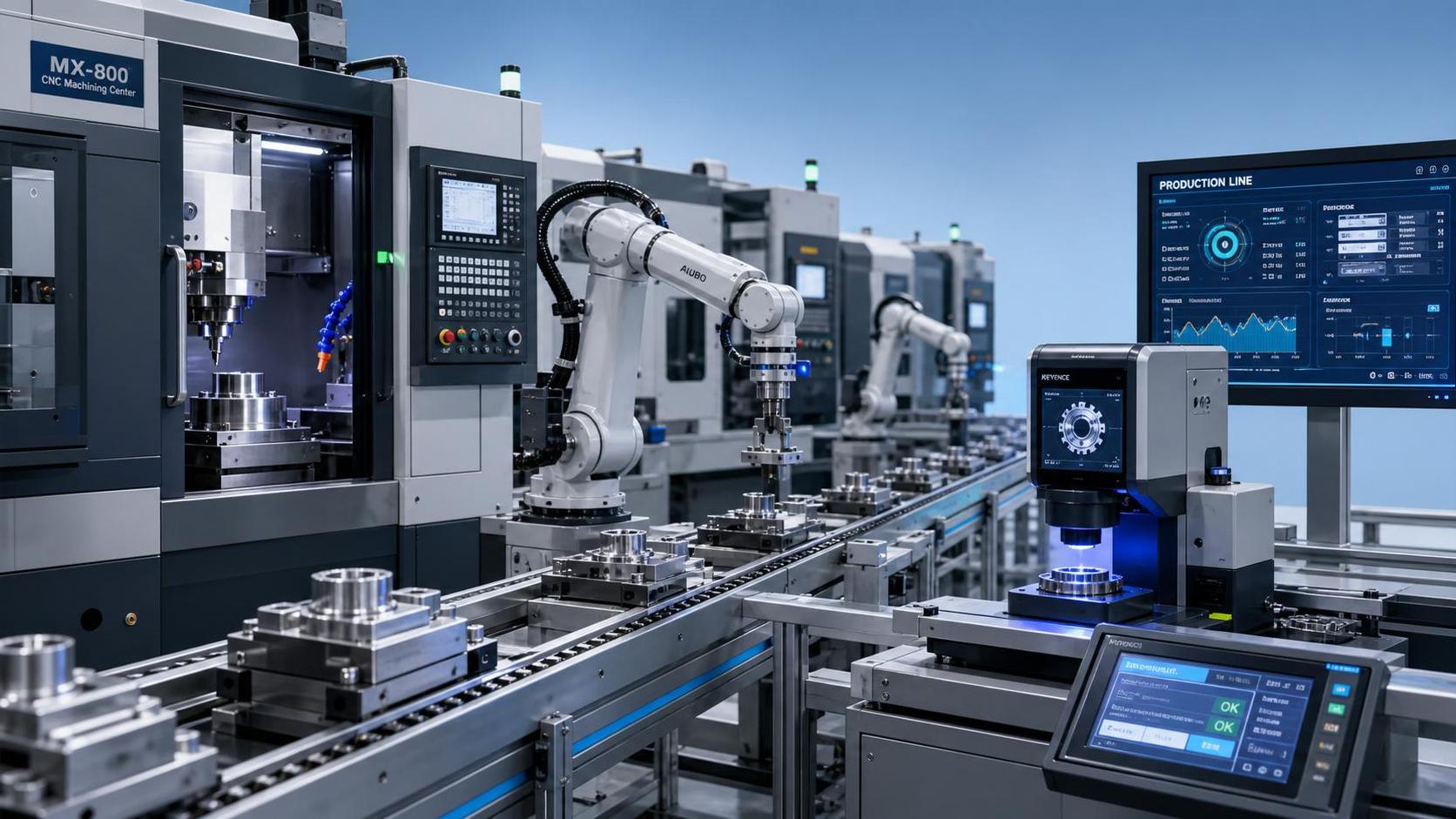
In manufacturing, automated industrial systems connect machines, software, sensors, and robotics into one controlled production environment.
The goal is simple: produce parts faster, with tighter accuracy, less waste, and fewer manual interruptions.
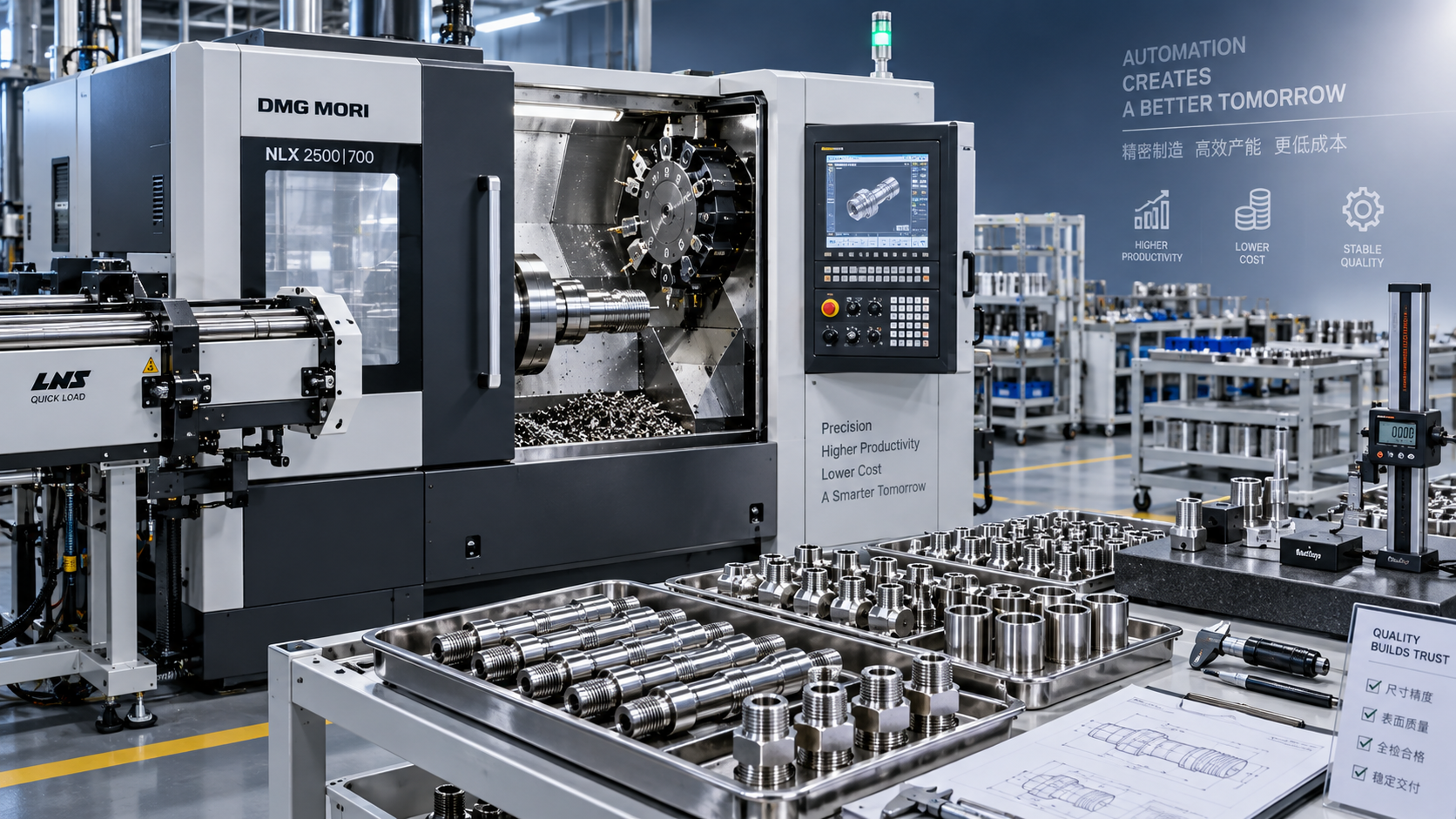
In practice, automated industrial setups often include CNC lathes, machining centers, industrial robots, conveyors, tool changers, inspection systems, and digital monitoring platforms.
That combination matters because modern factories no longer compete on labor cost alone.
They compete on output stability, lead time, traceability, and how quickly they can switch from one product mix to another.
From a planning perspective, automated industrial investment is not only about replacing people.
It is about building repeatable processes that reduce variation and support larger production goals.
This is especially relevant in CNC machining and precision manufacturing, where tolerance control and cycle time directly affect profitability.
As smart factory adoption grows, automated industrial solutions are becoming standard across both high-volume and high-mix environments.
What Automated Industrial Really Includes
The term can sound broad, so it helps to break it into working layers.
At the equipment level, automated industrial means machine tools that run programmed operations with minimal manual setup during each cycle.
At the line level, it means material moves automatically between stations through robots, pallets, gantries, or conveyors.
At the control level, it means PLCs, CNC systems, and production software coordinate motion, timing, alarms, and data collection.
At the management level, automated industrial operations feed real-time data into scheduling, maintenance, quality, and cost analysis.
A typical solution may include these elements:
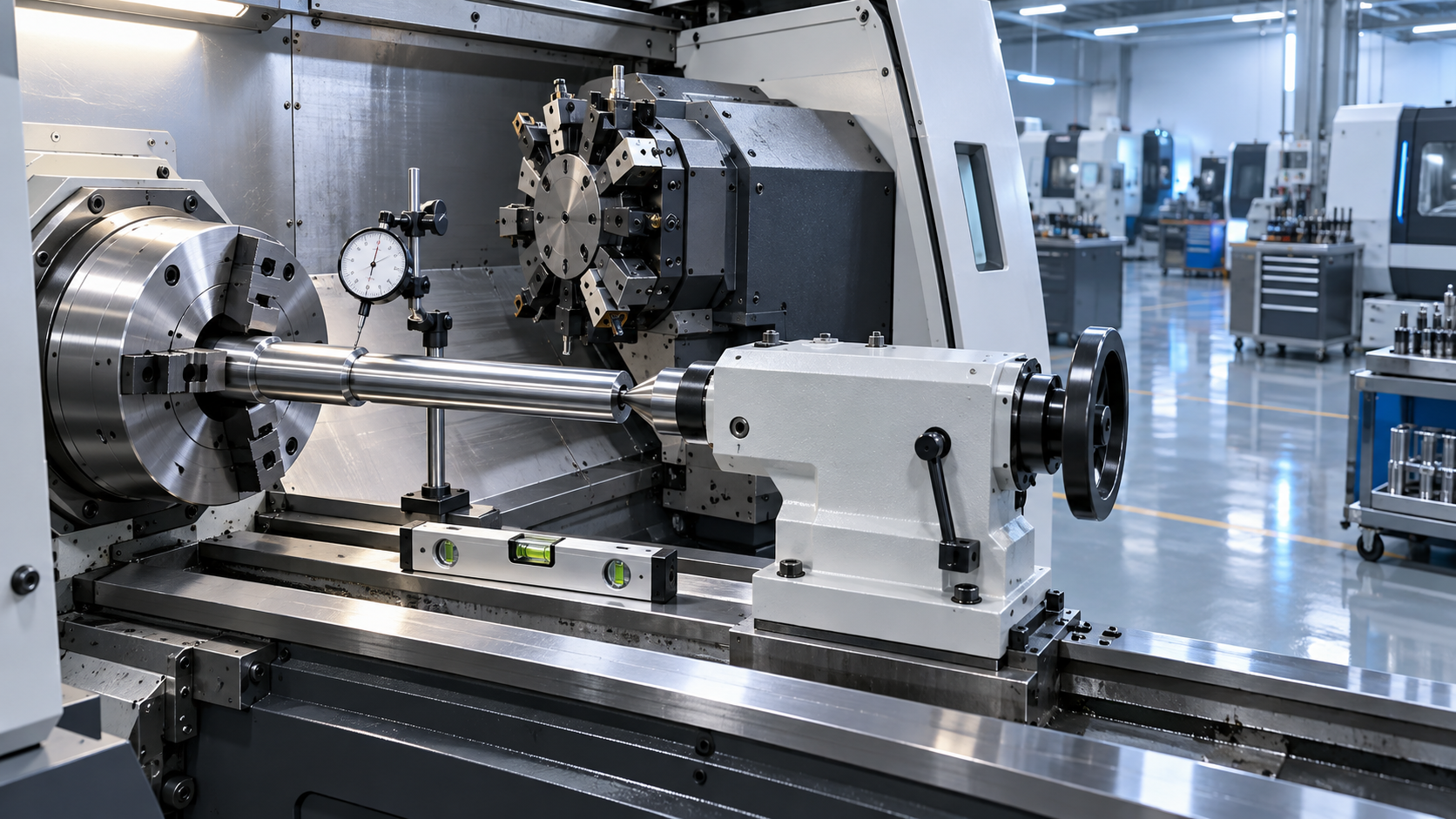
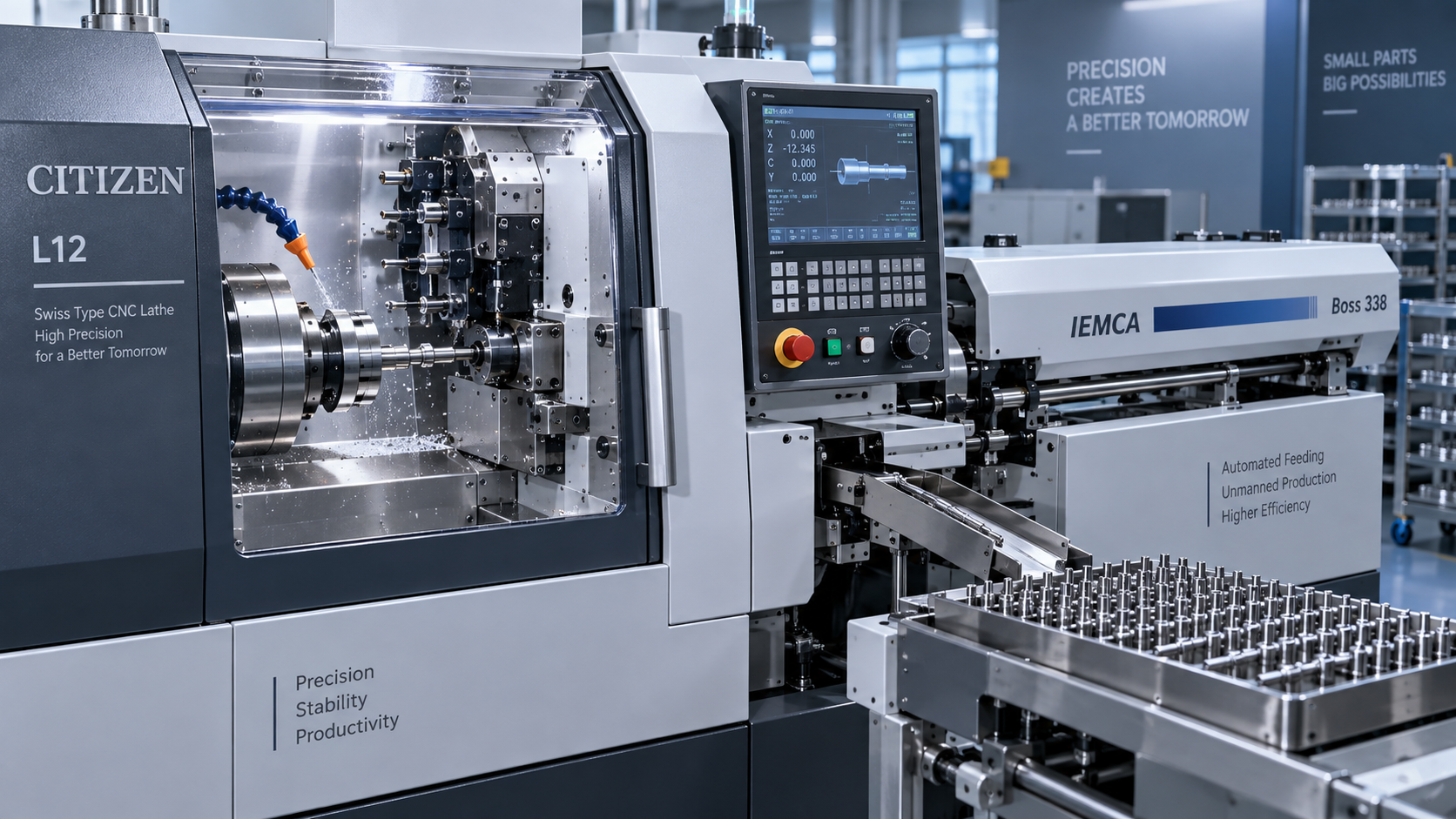
- CNC lathes for shafts, sleeves, and rotational parts
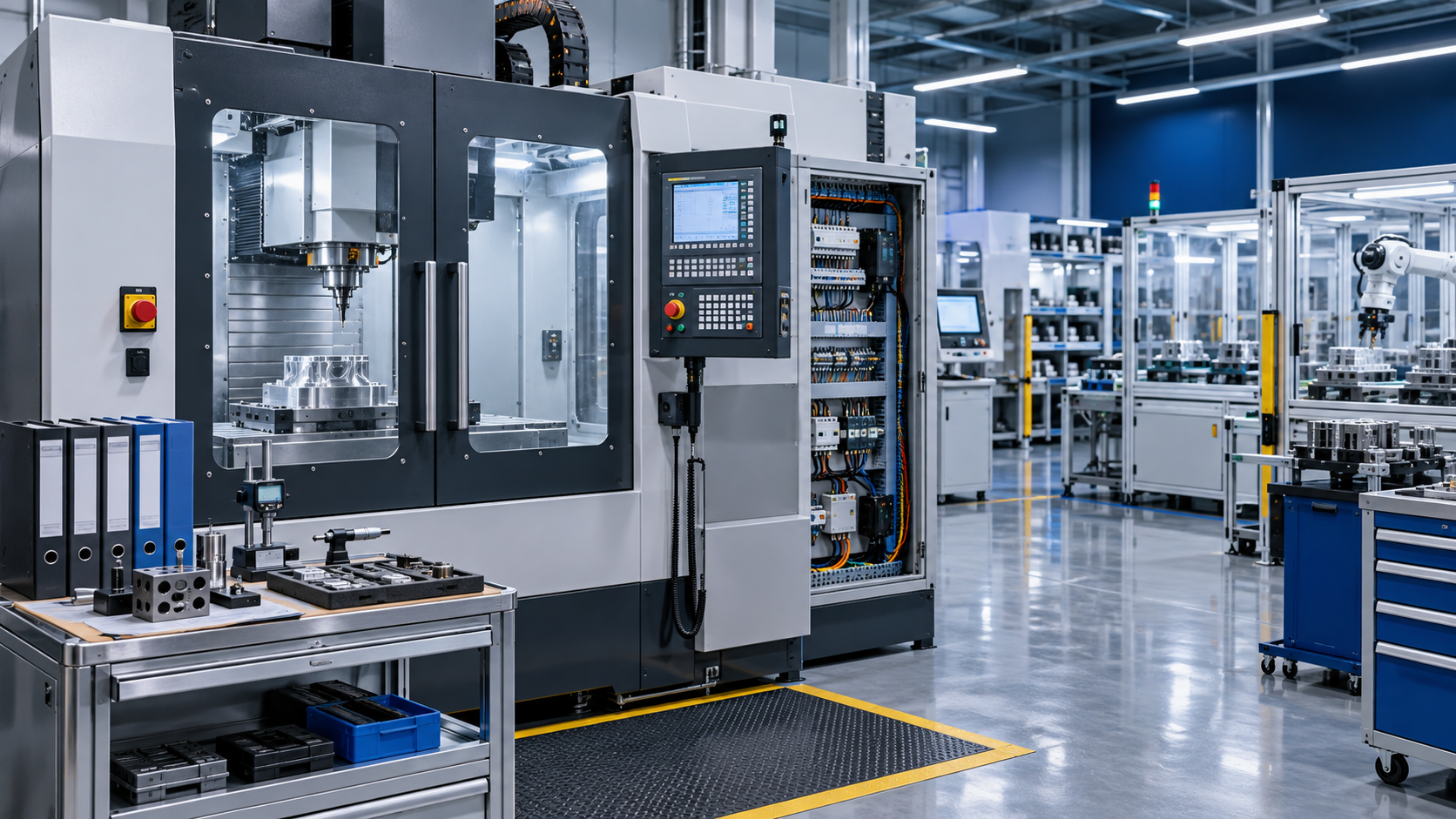
- Machining centers for complex structural components
- Multi-axis systems for high-precision contouring
- Robotic loading and unloading cells
- In-line gauging and vision inspection
- MES or SCADA tools for visibility and traceability
This wider definition matters because many factories already own CNC equipment but still lack a true automated industrial workflow.
The missing link is often integration, not hardware count.
Where Automated Industrial Is Used Most
Automated industrial systems are used most where output pressure, quality requirements, and process repetition are all high.
Several industries stand out.
Automotive Manufacturing
Automotive plants are among the heaviest users of automated industrial production.
Engine blocks, transmission housings, shafts, brake parts, and EV components all benefit from tightly controlled CNC machining and robotic handling.
The business case is strong because even small cycle-time gains scale quickly across large production volumes.
Aerospace
Aerospace uses automated industrial systems for a different reason: precision, compliance, and documentation.
Complex structural parts, turbine components, and lightweight alloys require stable machining conditions and reliable inspection records.
Automation helps reduce process drift and supports full traceability.
Electronics and Precision Components
Electronics production depends on small, repeatable, high-accuracy parts.
Automated industrial lines are common in connector machining, heat sink processing, enclosure production, and precision fixture manufacturing.
Fast changeovers also matter because product life cycles are short.
Energy Equipment
Energy equipment uses automated industrial machining for valves, flanges, pump bodies, turbine parts, and heavy-duty structural pieces.
Here, the value often comes from process reliability, long-run consistency, and safer handling of large workpieces.
Medical and General Precision Manufacturing
Medical parts, instruments, and general precision components also rely on automated industrial methods.
The common theme is simple: when defects are costly, repeatability becomes a strategic requirement.
Why Automated Industrial Matters for Project Execution
From an execution standpoint, automated industrial projects affect more than factory equipment.
They shape capacity planning, staffing models, floor layout, quality systems, and supply chain timing.
That is why the strongest projects begin with process mapping, not catalog selection.
A useful evaluation usually starts with five questions:
- Which parts drive the most volume or the most quality risk?
- Where do delays happen between machining, inspection, and transfer?
- Which operations suffer from labor variability or skill shortages?
- What data is missing for scheduling, maintenance, or root-cause analysis?
- How flexible must the line remain over the next three to five years?
These questions help define whether automated industrial investment should focus on one machine cell, a connected line, or a wider smart factory upgrade.
In real operations, the right answer is often phased rather than all at once.
Typical Automated Industrial Solutions in CNC Manufacturing
CNC-focused facilities usually adopt automated industrial solutions in practical, modular steps.
Common examples include:
- Robot tending for CNC lathes and vertical machining centers
- Pallet systems for unattended multi-shift machining
- Automatic tool measurement and breakage detection
- In-process probing for dimensional correction
- Centralized dashboards for OEE, alarms, and downtime tracking
- Integrated fixture and tooling management for repeat setups
Each option supports a different goal.
Robot tending reduces idle spindle time.
Probing improves consistency.
Pallet automation extends machine utilization beyond staffed shifts.
Digital monitoring makes hidden losses visible.
The better approach is to match the automated industrial solution to the production bottleneck instead of chasing broad automation claims.
Key Risks and How to Avoid Them
Automated industrial projects can underperform when the process is unstable before automation begins.
Automation scales problems just as efficiently as it scales output.
The most common risks include:
- Poor part standardization across product families
- Unstable fixtures, tooling, or incoming material quality
- Weak integration between machine data and production planning
- Overbuilt systems that are expensive to maintain
- Insufficient operator and maintenance training
A more reliable rollout usually follows a staged path.
First stabilize the machining process.
Then automate loading, measurement, or transfer.
After that, connect performance data to scheduling and maintenance decisions.
That sequence keeps the automated industrial model grounded in real production control.
How to Choose the Right Automated Industrial Direction
Recent market changes make one point clearer than before: automation decisions should support both present demand and future flexibility.
That means evaluating not only machine capability, but also integration effort, service support, software compatibility, and upgrade paths.
A practical screening table can help.
This kind of review keeps automated industrial planning tied to measurable outcomes instead of vendor promises alone.
Final Takeaway
So, what does automated industrial mean in manufacturing?
It means combining CNC technology, robotics, controls, and production data into a system that runs with greater precision, speed, and consistency.
It is used most in automotive, aerospace, electronics, energy equipment, and other precision-driven sectors.
More importantly, automated industrial adoption works best when it starts from clear production problems.
Focus first on bottlenecks, repeatability, and data visibility.
Then build a phased solution around CNC machines, tooling, inspection, and line integration.
That approach gives automated industrial investment a better chance to improve output, control risk, and support long-term smart manufacturing goals.
Recommended for You
 Zero-Point Clamping or Modular Fixtures? Choosing a Faster CNC Changeover SystemCNC Machining Technology Center
 How to Cut CNC Fixture Changeover Time Without Sacrificing Part AccuracyCNC Machining Technology Center
 When Does CNC Turning Pay Off? A Break-Even Guide by Annual Part VolumeMachine Tool Industry Editorial Team
 Machine Tool Standards by Country: What Importers Must Verify Before PurchaseManufacturing Policy Research Center
 CNC Lathe Quick Installation Guide: Alignment Checks Before First Production RunCNC Machining Technology Center
 How to Select a CNC Lathe for Small Parts Without Sacrificing Accuracy or Cycle TimeCNC Machining Technology Center

Aris Katos
Future of Carbide Coatings
15+ years in precision manufacturing systems. Specialized in high-speed milling and aerospace grade alloy processing.
▶
Smart Manufacturing for Small Businesses: Where Automation Delivers the Fastest ROIMachine Tool Industry Editorial Team▶
How Smart Manufacturing Technology Improves OEE Across Industry 4.0 Production LinesMachine Tool Industry Editorial Team▶
How to Evaluate an Automation Line for Electronics Production Before InvestmentMachine Tool Industry Editorial Team▶
How to Evaluate an Automated Production Line for Output, Flexibility, and ROIMachine Tool Industry Editorial Team▶
How Smart Manufacturing Improves Traceability and Quality Control in Aerospace?Machine Tool Industry Editorial Team
Mastering 5-Axis Workholding Strategies
Join our technical panel on Nov 15th to learn about reducing vibrations in thin-wall components.

Providing you with integrated sanding solutions
Before-sales and after-sales services
Comprehensive technical support