• Global CNC market projected to reach $128B by 2028 • New EU trade regulations for precision tooling components • Aerospace deman
NYSE: CNC +1.2%LME: STEEL -0.4%

CNC Manufacturing for Energy Equipment: Key Tolerance, Material, and Cost Factors
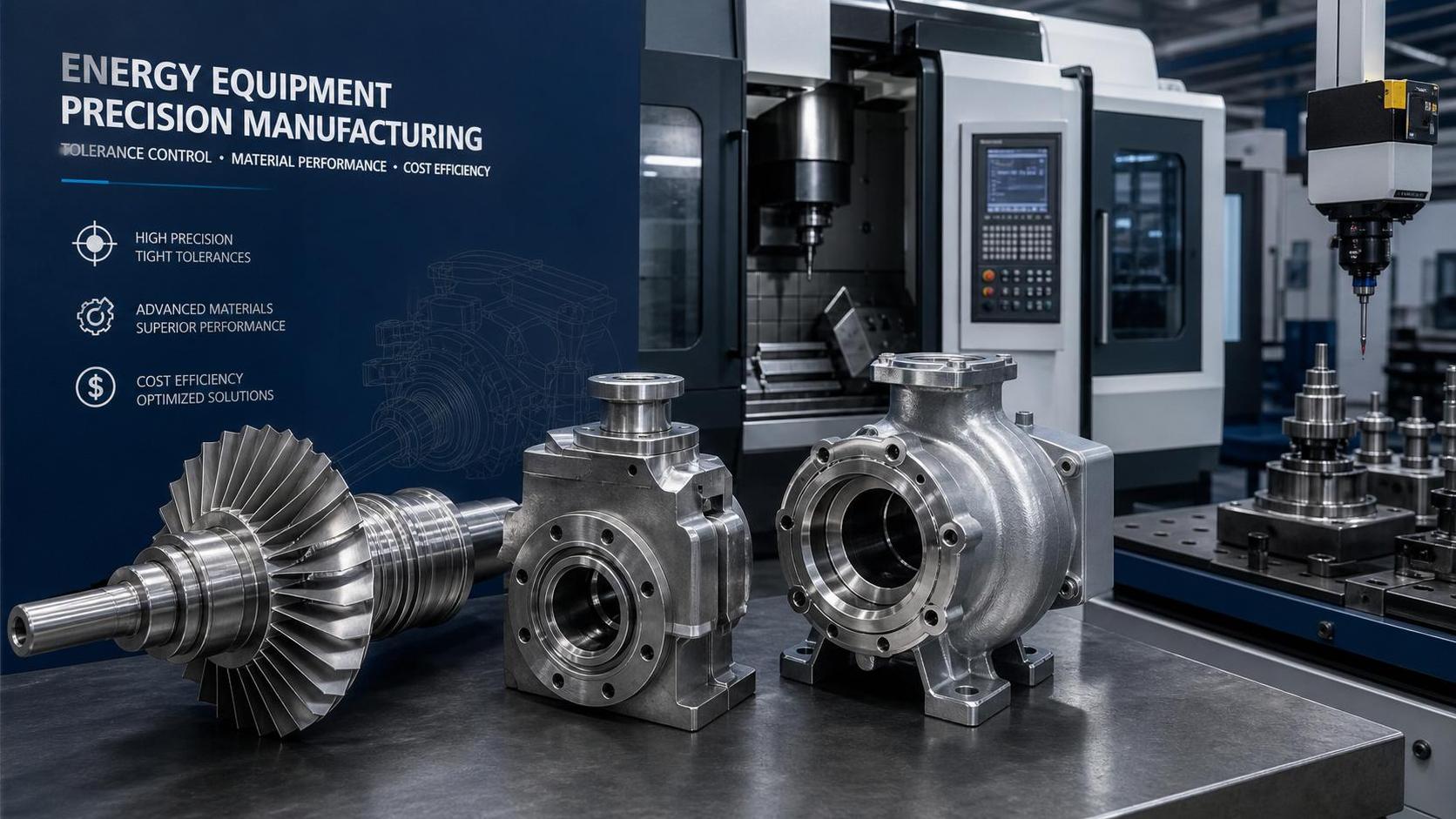
CNC manufacturing for energy equipment is no longer a narrow machining issue. It sits at the intersection of reliability, lifecycle performance, supply chain stability, and cost control.
That matters because energy systems now operate under tighter efficiency targets, harsher service conditions, and longer maintenance cycles. A small deviation in machining quality can affect sealing, vibration, corrosion resistance, and overall operating risk.
From turbine shafts to valve bodies, pump housings, connector blocks, and structural supports, the manufacturing route influences both technical performance and commercial outcomes. For that reason, decisions around tolerance, material, and cost should be evaluated together rather than in isolation.
Why the topic has become more important
The machine tool sector has become a core driver of advanced manufacturing across automotive, aerospace, electronics, and energy. Energy equipment now benefits directly from the same shift toward automation, digital integration, and higher process precision.
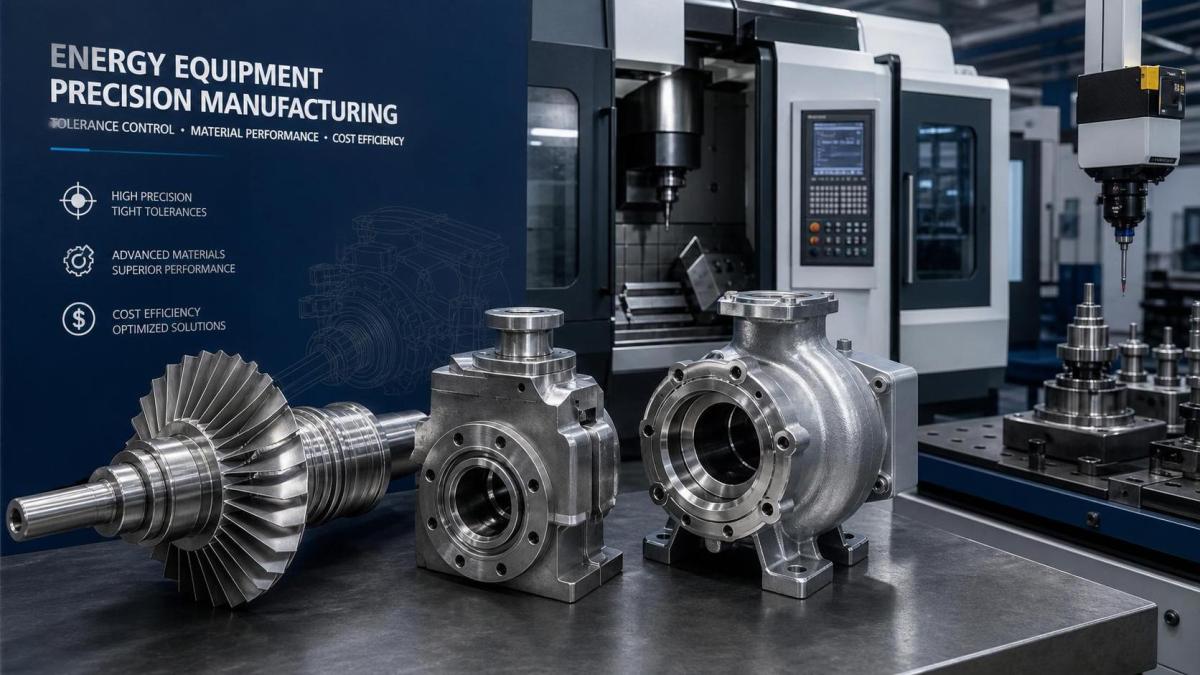
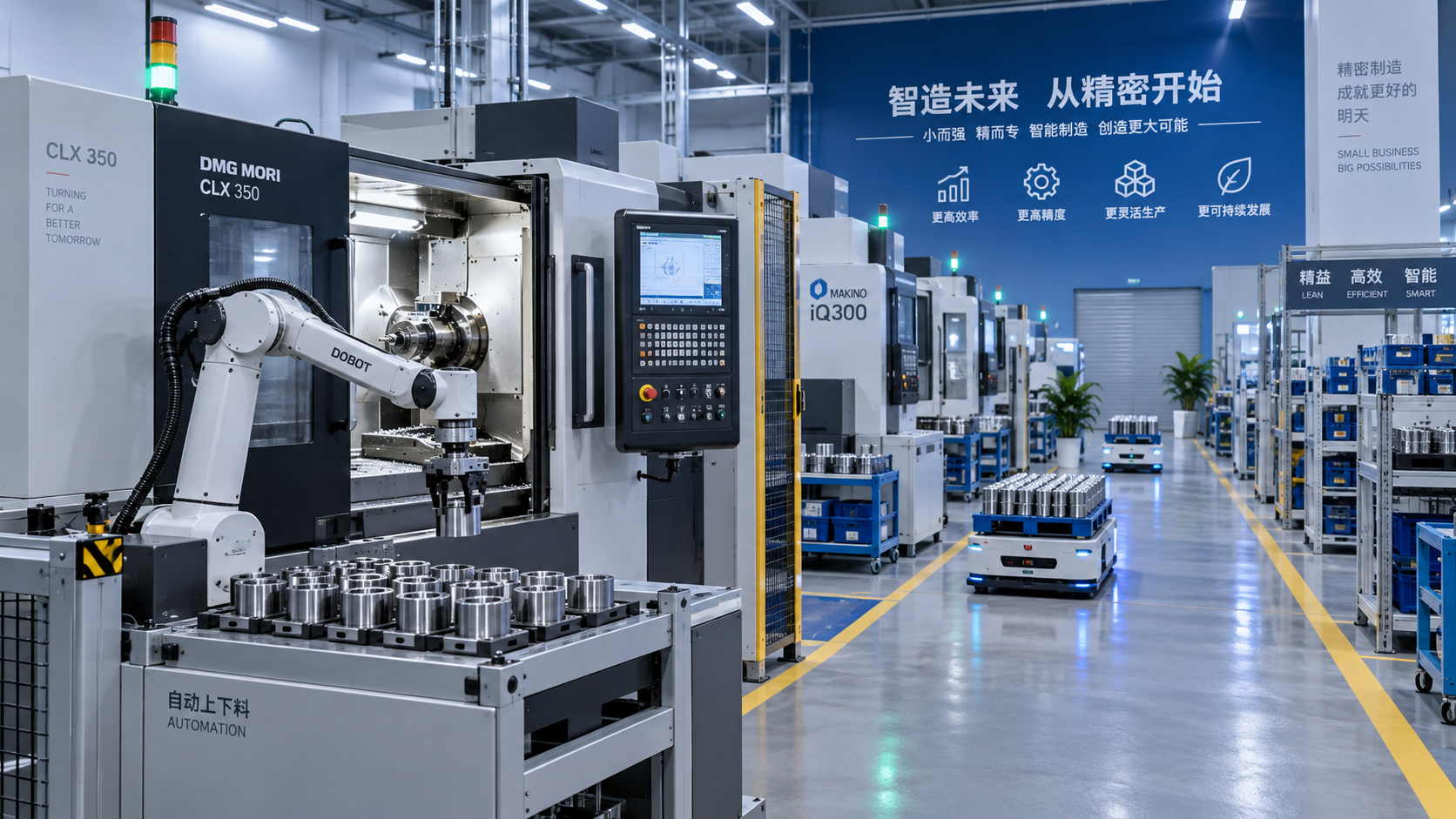
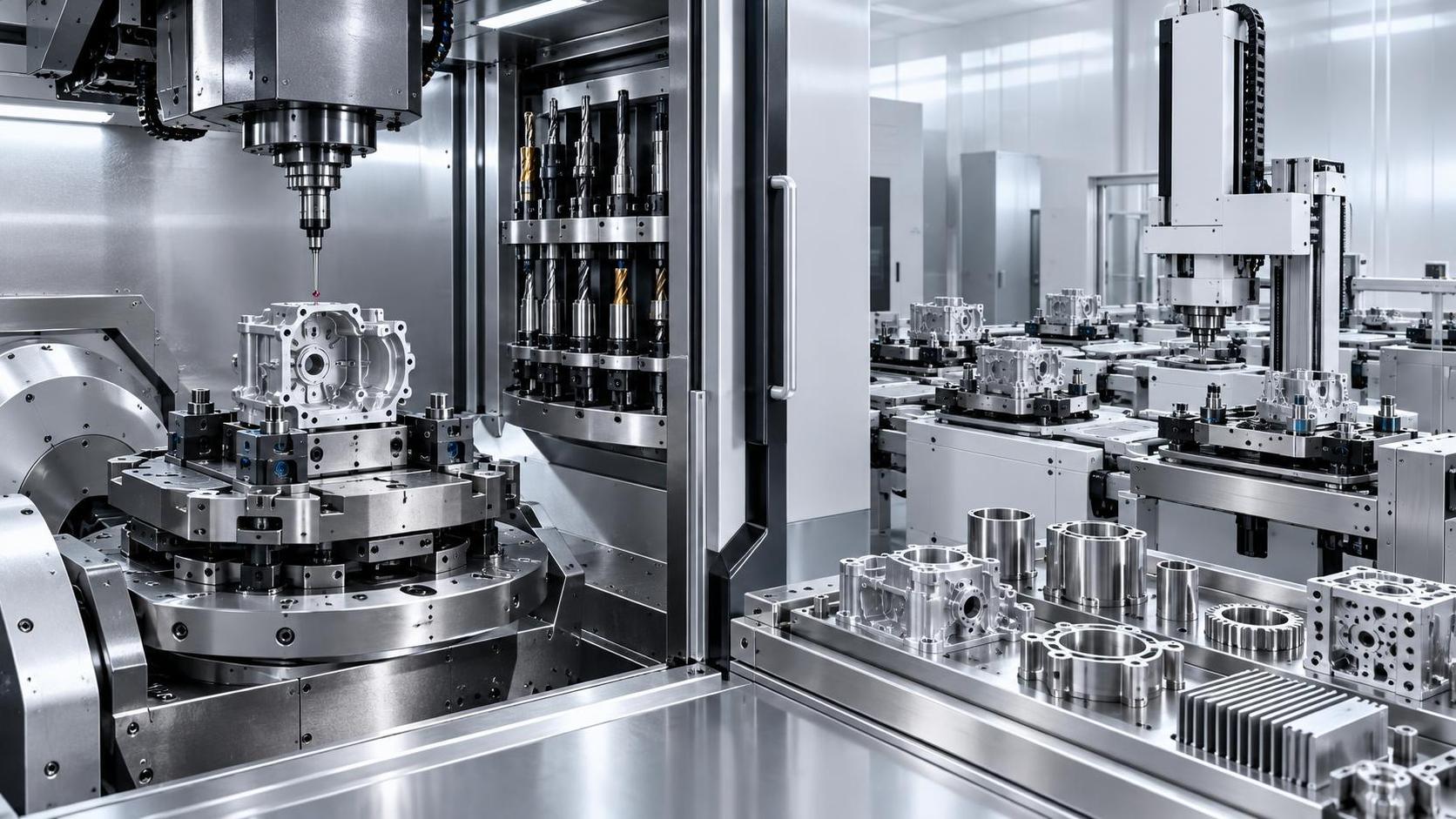
Multi-axis machining centers, CNC lathes, robotic loading systems, and flexible production lines make it possible to produce complex parts with repeatable accuracy. In energy applications, that repeatability often matters more than peak speed.
The pressure is also global. Industrial clusters in China, Germany, Japan, and South Korea continue to raise capability levels, while international suppliers compete on lead time, quality assurance, and process transparency.
As a result, CNC manufacturing for energy equipment is increasingly judged not only by whether a part can be made, but by whether it can be made consistently, documented clearly, and scaled without hidden cost.
What CNC manufacturing for energy equipment really covers
In practical terms, this field includes precision machining for power generation, oil and gas, renewable energy, electrical infrastructure, and supporting industrial systems.
The components involved are rarely generic. They often include pressure-retaining parts, rotating elements, high-temperature interfaces, and custom features for assembly or field maintenance.
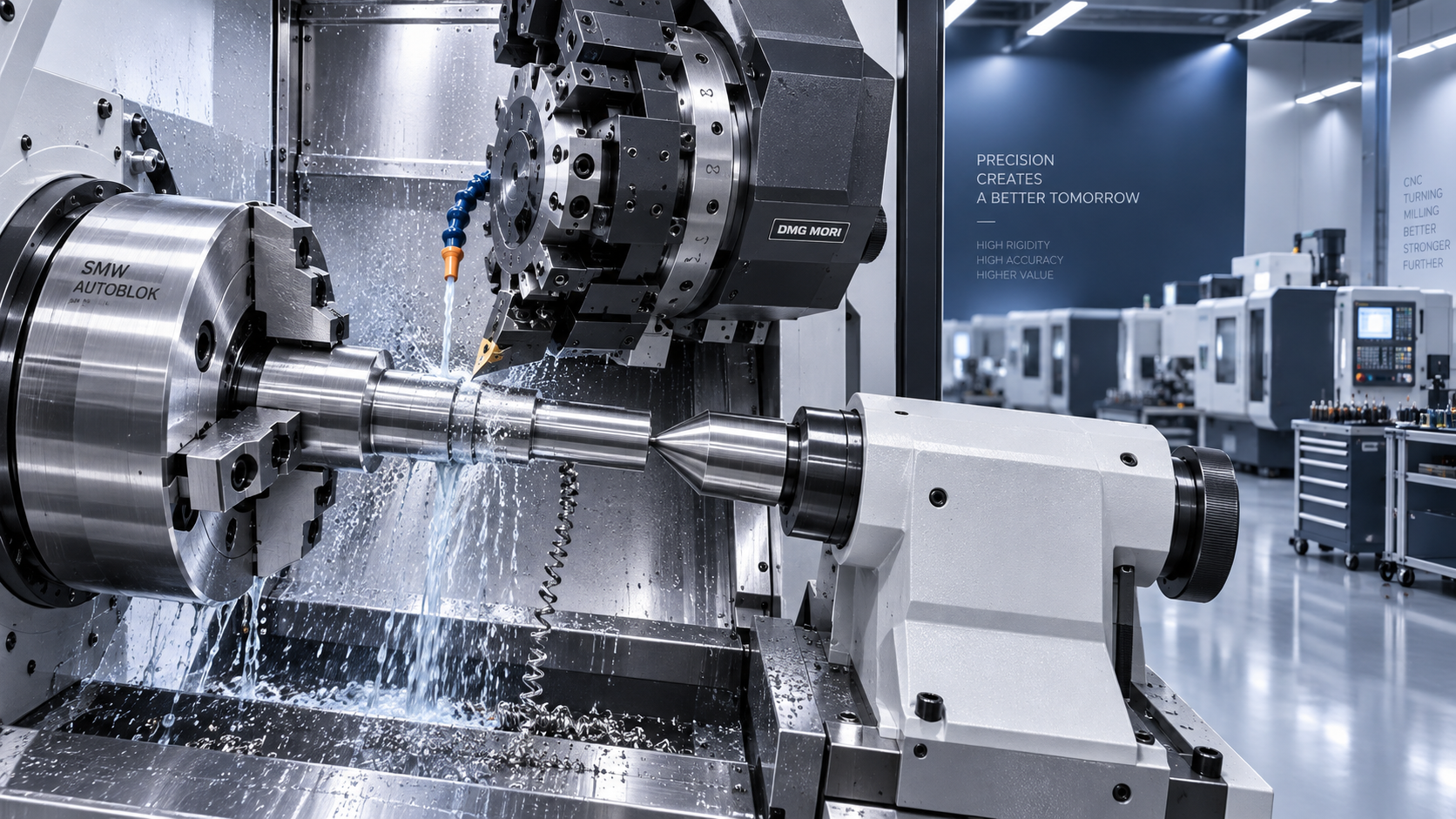
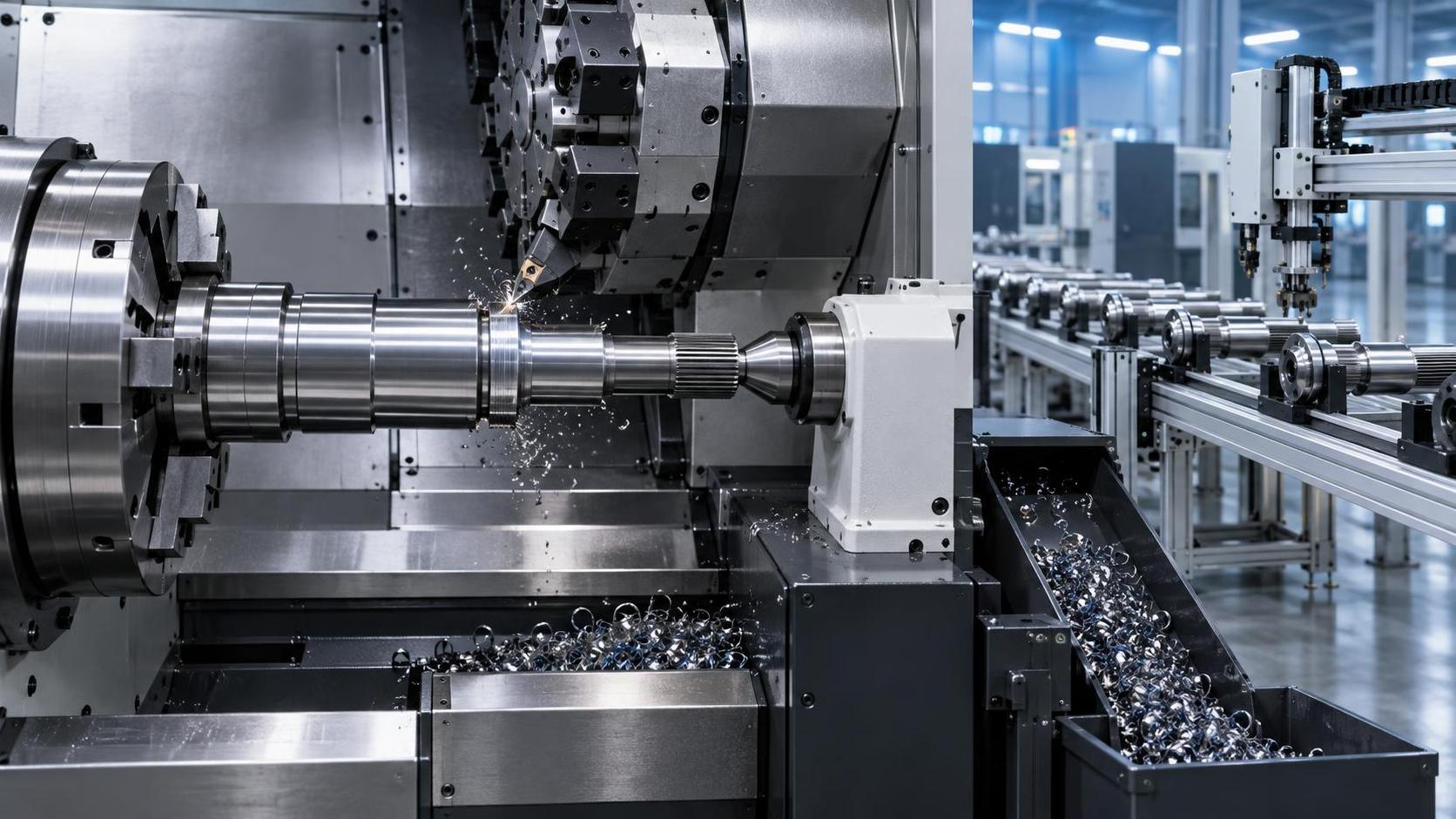
Typical manufacturing processes may include turning, milling, boring, drilling, threading, grinding, and surface finishing. In more demanding projects, in-process measurement, fixture optimization, and tool path simulation become part of the value chain.
This is why CNC manufacturing for energy equipment should be viewed as a process capability question, not just a drawing execution task.
Tolerance decisions affect more than dimensional accuracy
Tolerance is often treated as a checklist item, yet in energy equipment it shapes function, assembly behavior, and service life. The right tolerance is the one that supports performance without creating unnecessary machining burden.
For example, close tolerance may be critical for bearing fits, concentric sealing surfaces, shaft alignment, and fluid control geometries. But applying ultra-tight tolerance everywhere can slow production, increase scrap risk, and add inspection cost.
A better approach is to separate critical features from secondary ones. That makes drawings more manufacturable and helps suppliers allocate effort where it actually protects equipment performance.
Where tight tolerance usually matters most
- Mating faces that must seal under pressure or temperature cycling
- Rotating parts that influence balance, wear, and vibration
- Precision bores and threads tied to assembly repeatability
- Reference datums used across multiple machining operations
When reviewing CNC manufacturing for energy equipment, geometric tolerances and surface finish often deserve as much attention as nominal dimensions. Flatness, runout, cylindricity, and roughness may determine whether a component works in the field.
Material selection changes the machining strategy
Material choice is not only a design issue. It directly changes cutting behavior, tooling wear, cycle time, fixture design, and post-processing requirements.
Energy equipment commonly uses carbon steel, stainless steel, alloy steel, aluminum alloys, nickel-based alloys, titanium, and engineering plastics for selected applications. Each brings different trade-offs.
In CNC manufacturing for energy equipment, material selection should be tied to service temperature, corrosion exposure, pressure demand, and maintenance expectations. A lower-cost material may raise lifecycle cost if it requires more frequent replacement or coating repair.
The cost picture is broader than the quoted unit price
A part that looks inexpensive on paper may become expensive after rework, inspection delays, packaging damage, or field failure. That is why total cost needs to be assessed across the full manufacturing path.
In many cases, cost is driven by a combination of material removal volume, tolerance difficulty, machine time, setup complexity, tooling consumption, and quality documentation.
Common hidden cost drivers
- Over-specified tolerances on non-critical features
- Late design changes after fixtures or programs are prepared
- Material procurement delays and substitute approvals
- Special inspections, traceability, or certification needs
- Secondary operations such as coating, balancing, or heat treatment
For CNC manufacturing for energy equipment, the most effective cost reduction usually comes from manufacturability improvement, not from simply pressing suppliers for a lower price.
Where these decisions show up in real equipment
The same machining logic appears across different energy segments, although the priorities change by application.
Wind power components may emphasize fatigue resistance, large-part accuracy, and corrosion control. Oil and gas parts may prioritize pressure integrity, thread quality, and material traceability.
Power generation systems often focus on rotating balance, thermal stability, and dimensional consistency across assemblies. Electrical infrastructure parts may value conductive performance, enclosure fit, and repeatable batch production.
Across all of these, CNC manufacturing for energy equipment becomes stronger when design intent, machining capability, and inspection standards are aligned early.
How to evaluate a machining approach before production starts
A sound review should begin with function. Which dimensions are truly performance-critical? Which surfaces influence sealing, wear, load transfer, or assembly repeatability?
Then look at process fit. Some parts are better suited to multi-axis machining, while others benefit from a simpler route with stable fixturing and fewer setup transfers.
It also helps to confirm whether the supplier can manage the full chain, including raw material sourcing, heat treatment coordination, in-process inspection, and final reporting. In energy projects, fragmented responsibility often creates schedule risk.
Useful checkpoints during evaluation
- Match critical tolerances to actual functional requirements
- Verify material availability and certification path early
- Review likely distortion after welding or heat treatment
- Check inspection methods for hard-to-measure features
- Compare batch size against setup and automation strategy
This is also where digital manufacturing tools add value. Simulation, process monitoring, and production data tracking can improve predictability, especially for repeat orders or multi-site supply programs.
A practical way to move forward
The most reliable decisions in CNC manufacturing for energy equipment usually come from comparing three things at the same time: part function, process capability, and full lifecycle cost.
That means reviewing drawings for critical features, testing whether the chosen material supports both service conditions and machinability, and confirming that quoted cost reflects inspection, finishing, and delivery realities.
Where uncertainty remains, a pilot batch or prototype review can reveal tolerance risks, material behavior, and true production efficiency before volume commitments are made.
For teams following global machining and precision manufacturing trends, the next useful step is to build a clearer internal checklist for tolerance priorities, material validation, and supplier process visibility. That creates a stronger basis for both technical judgment and commercial planning.
Recommended for You
 CNC Lathe Quick Installation Guide: Alignment Checks Before First Production RunCNC Machining Technology Center
 How to Select a CNC Lathe for Small Parts Without Sacrificing Accuracy or Cycle TimeCNC Machining Technology Center
 How to Select a Slant Bed Lathe for High-Precision Shaft and Chuck WorkCNC Machining Technology Center
 Smart Manufacturing for Small Businesses: Where Automation Delivers the Fastest ROIMachine Tool Industry Editorial Team
 How to Specify a CNC Lathe for High-Volume Automotive Shaft ProductionCNC Machining Technology Center
 How Automated Precision Machining Maintains Tolerance in High-Mix ProductionCNC Machining Technology Center

Aris Katos
Future of Carbide Coatings
15+ years in precision manufacturing systems. Specialized in high-speed milling and aerospace grade alloy processing.
▶
How Automated Precision Machining Maintains Tolerance in High-Mix ProductionCNC Machining Technology Center▶
CNC Programming Explained: From CAD Models to Reliable Shop-Floor ToolpathsCNC Machining Technology Center▶
How Multi-Axis Machining Produces Complex Components With Fewer SetupsCNC Machining Technology Center▶
How Much Does CNC Programming Software Cost in 2026?CNC Machining Technology Center▶
CNC Machining Explained: Processes, Tolerances, and Parts It Can ProduceCNC Machining Technology Center
Mastering 5-Axis Workholding Strategies
Join our technical panel on Nov 15th to learn about reducing vibrations in thin-wall components.

Providing you with integrated sanding solutions
Before-sales and after-sales services
Comprehensive technical support